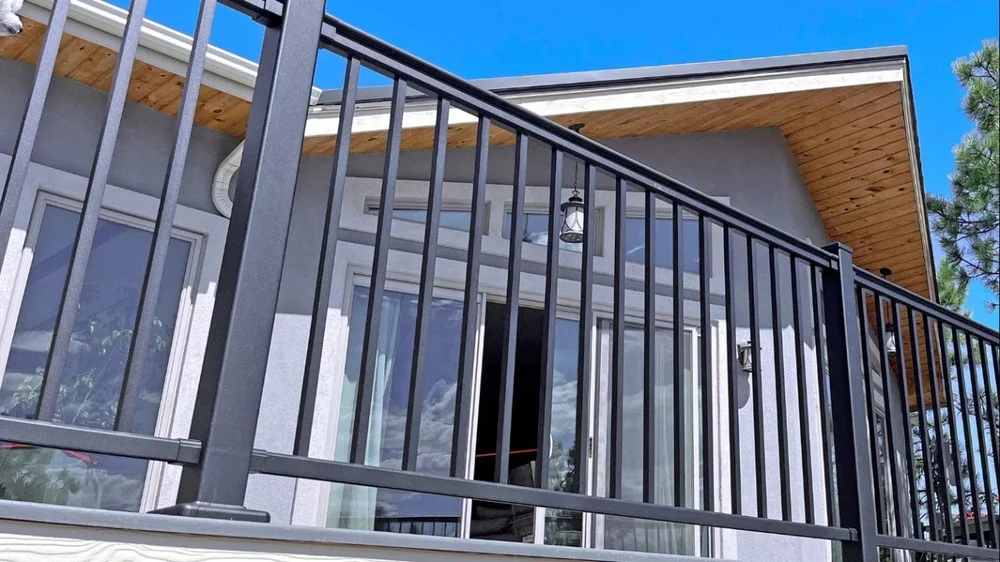
When it comes to designing the perfect outdoor space, the details matter—and deck railings are a big part of that story. They’re not just about safety—they’re about framing your view, boosting curb appeal, and withstanding everything the West Coast climate throws at them. And if you live in Victoria, Saanich, or anywhere across Vancouver Island, you know firsthand that “weather-resistant” isn’t just a nice-to-have. It’s essential.
So, what should you choose for your deck railing—aluminum or composite?
Both materials are popular, both offer modern style and performance, and both are marketed as durable. But as many homeowners on the Island discover, there are some very important distinctions between the two. Whether you’re building a brand-new deck in Broadmead, updating a balcony in James Bay, or replacing railings on a heritage home in Oak Bay, making the right choice now will save you a lot of time and effort down the line.
Let’s dive into the details, unpack the subtle differences, and explore why aluminum railings are becoming the go-to choice for homeowners in our corner of British Columbia.
Life on the Island: The Real-World Test for Deck Railings
Living on Vancouver Island means enjoying some of the most breathtaking natural views in the country. Whether you’re staring at the ocean, the forest, or the hills of Saanich, there’s no denying that we live in paradise. But paradise comes with a unique set of challenges—especially for materials that live outdoors.
Composite railings are made from a mix of wood fiber and plastic. On paper, they offer a nice compromise: more durable than traditional wood and a little warmer-looking than metal. But our humid coastal air, frequent rainfall, and mild winters introduce long-term issues that many product brochures don’t fully account for.
The organic material in composite railings is prone to attracting mold, moss, and mildew, particularly on shaded decks that don’t dry out quickly. Think of those north-facing patios or the decks tucked under a canopy of Douglas firs—beautiful spaces, but not the friendliest environments for composite. Once dirt and moisture settle in, keeping that textured surface clean is a seasonal chore.
Aluminum, by contrast, is non-porous. It doesn’t absorb water. It doesn’t provide nutrients for algae. It simply sheds the elements. That makes it particularly well-suited to Victoria’s mix of misty mornings, salty air, and sudden spring showers.
Style Matters: Matching Your Railing to Your Vision
We all want our outdoor spaces to reflect our personal style. For some, that means a rustic, wood-inspired look. For others, it’s all about clean lines and modern minimalism. And while both aluminum and composite can deliver a nice aesthetic up front, they don’t age the same way.
Composite railings often appeal to those looking for a wood-like finish without the maintenance of real wood. They come in muted tones—greys, browns, and earth tones—that mimic painted wood. But the catch is that composite boards, even when made with UV inhibitors, are prone to fading and chalking over time. The sun we get here on the Island may not be tropical, but it’s consistent—and over a few seasons, composite colours can dull or discolour unevenly, especially on sunny decks in Fairfield or Brentwood Bay.
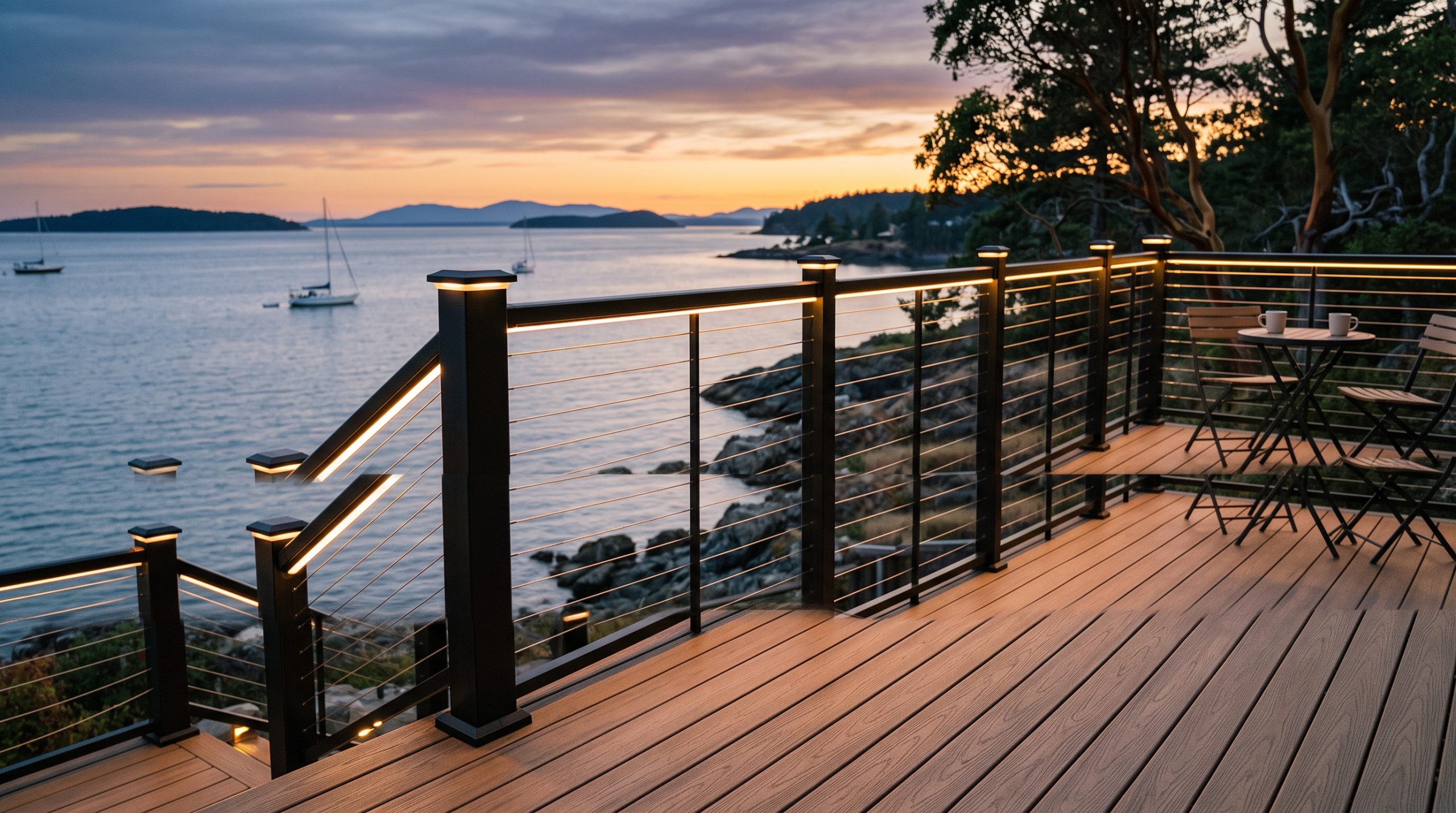
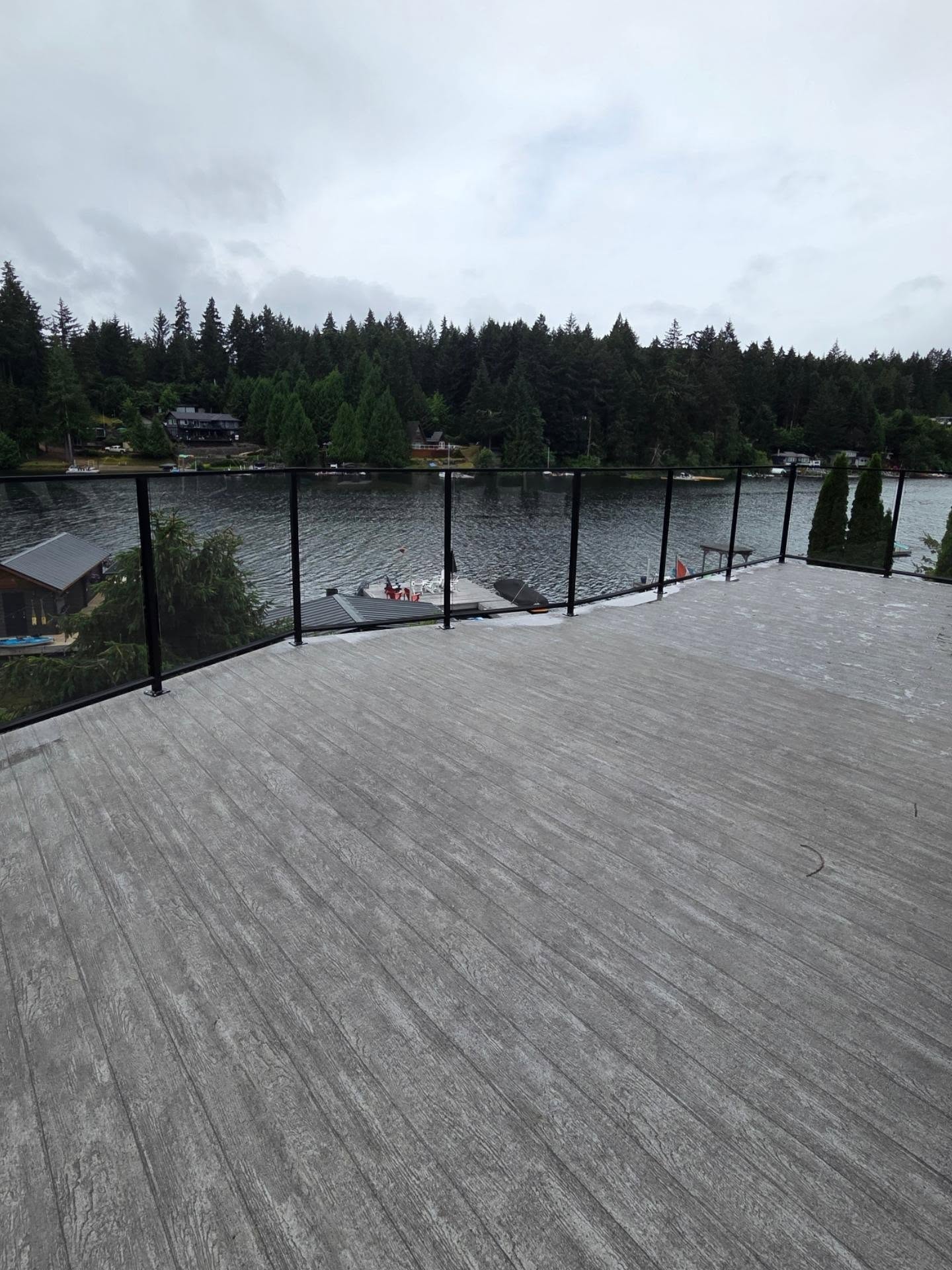
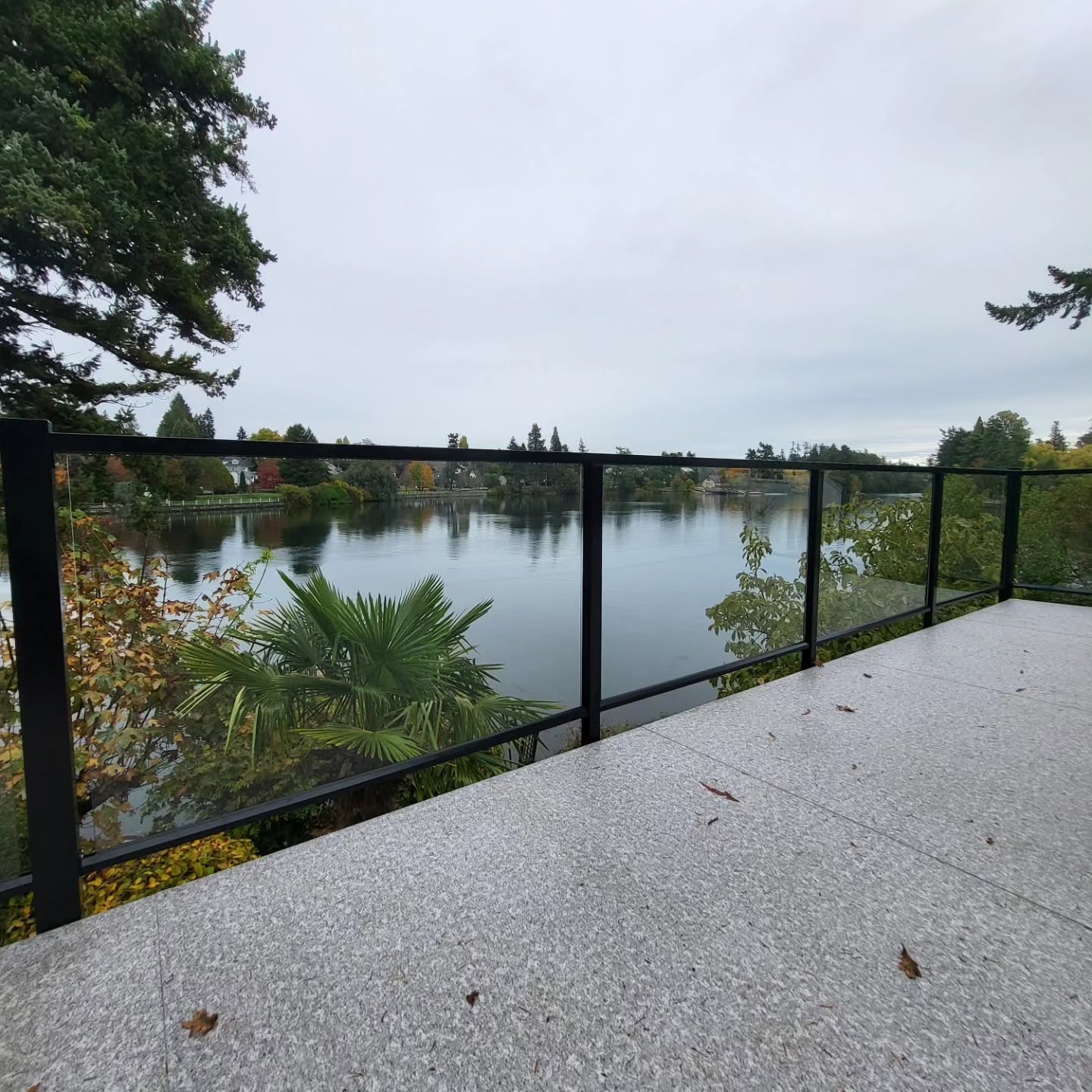
Aluminum railing systems, particularly powder-coated aluminum, are built to retain their colour and finish for decades. The powder coating process bonds colour to the metal surface, creating a finish that resists chipping, cracking, and fading. Whether you want a sleek matte black to pair with glass panels or a classic white picket style for a traditional look, aluminum offers more consistency over the long haul.
Not to mention: aluminum offers far more design flexibility. From vertical pickets to horizontal cable railings, frameless glass panels, and even custom colors, the range of possibilities is huge. Want your railing to disappear into the landscape? Choose a slim-profile black. Want it to pop against your siding? Go for white or bronze. With composite, colour and design options are often limited to what the manufacturer offers, and custom work is harder to come by.

Installation & Adaptability: Making It Work on Any Deck
If there’s one thing we’ve learned working on homes and businesses throughout Greater Victoria, it’s this: no two decks are exactly alike. Some are perched over rocky terrain. Others wrap around heritage homes with tight corners and funky dimensions. And some are built in phases over several years, which makes fitting pre-cut railing kits a challenge.
Composite railing systems, while sturdy, tend to be bulky and rigid. They come in large, heavy sections and require more effort to cut, drill, and secure. Some also require hidden fasteners or specialized tools for proper installation. That may not be a dealbreaker, but it can slow things down—and add cost if you’re hiring a contractor.
Aluminum railings are lightweight, modular, and incredibly easy to install. Whether you’re working on a single-level patio or a multi-tiered deck in Cordova Bay, the adaptability of aluminum makes life easier. Most systems are designed to accommodate a variety of layouts, slopes, and transitions, making them ideal for custom or irregular spaces.
Maintenance: The Island-Proof Factor
We get it—nobody wants to babysit their deck railings. And yet, some materials demand exactly that.
Composite might not need painting or staining, but it does need regular washing—and not just for looks. Left unchecked, grime and mold can embed themselves in the material’s surface. Depending on where you live (say, a tree-heavy street like Maplewood or a rainy cul-de-sac in Gordon Head), that may mean scrubbing every spring—and possibly again in fall.
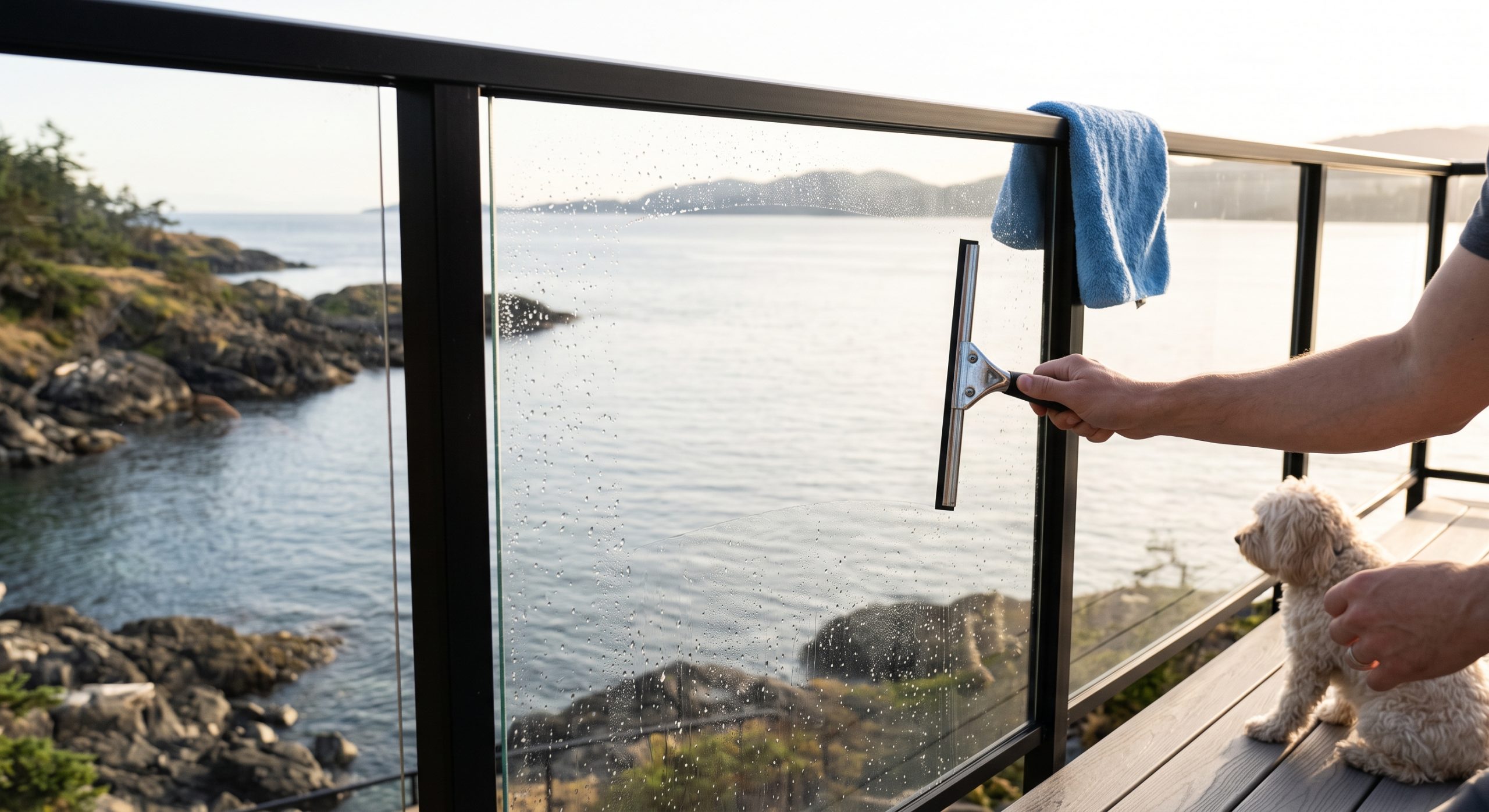
In contrast, aluminum railings are virtually maintenance-free. Rain typically takes care of most of the cleaning. For any buildup, a quick rinse or gentle wipe-down is all you need. That’s it. No sealants, no mold sprays, no elbow grease. Just peace of mind.
Plus, aluminum doesn’t expand or contract with temperature swings the way composites can. On decks exposed to both summer heat and winter frost, this means your aluminum railing won’t loosen, shift, or warp. It simply stays put.

Safety, Strength, and Stability
Deck railings aren’t just about style—they’re a critical safety feature. They need to hold strong under pressure, stay upright in wind, and pass strict building codes.
Both composite and aluminum meet safety standards, but there’s a confidence that comes with metal. Aluminum railings are engineered for strength and rigidity. Despite being lightweight, they offer excellent structural integrity. And because they’re made from a single material, with fewer joints and no risk of moisture penetration, they maintain that integrity over time.
Composite, while strong, is more dependent on its underlying structure. The railing’s performance can change if the internal wood flour breaks down or if the fasteners loosen over time. That’s especially important for higher decks, where safety is non-negotiable.
We’ve installed aluminum railings on everything from low garden patios to three-storey walkout balconies, and we’ve seen firsthand how they hold up under real-world conditions.

Longevity: Value That Sticks Around
Ask any homeowner what matters most in a home improvement purchase, and “how long will it last?” is bound to come up.
Composite railing systems are often advertised with warranties of 20 years or more. But real-world results often vary. Surface wear, colour fade, structural shifting—these are issues that can appear in year 7 or 8, long before the warranty ever runs out.
Aluminum railings? They’re the tortoises of the railing world. Slow to wear, slow to age, and incredibly reliable. Properly installed and coated aluminum can easily last 30–40 years with little more than the occasional hose-down. For many Island homeowners, that means you install it once—and then don’t think about it again.
There’s also the added bonus of recyclability. Aluminum is one of the most environmentally friendly metals, and it can be recycled indefinitely without losing quality. That’s a big plus for homeowners who want their upgrades to reflect sustainable values.
A Local Advantage: Why Aluminum Wins in Victoria
Here’s the bottom line: composite might perform reasonably well in drier regions or under ideal conditions. But Vancouver Island is its own beast. Our rain, fog, salt air, and tree coverage create challenges that many other areas simply don’t face.
We’ve had customers call us after a few seasons with composite, frustrated with the discoloration, mildew, or loosening components. In some cases, they inherited composite railings when they bought the home and were ready for something more reliable.
Aluminum stands the test of time—especially on Vancouver Island. It thrives in our marine climate, maintains its beauty with minimal upkeep, and offers the peace of mind that comes from knowing your railing won’t become another maintenance headache.
And when you work with a local aluminum railing company that understands the nuances of Island construction, design trends, and permitting, you’re not just getting a product. You’re getting personalized support, custom-fit solutions, and a team that’s genuinely invested in the long-term performance of your project.

Every homeowner and business has different priorities. Some focus on aesthetics. Others value performance. Most want a blend of both.
Composite railings can certainly be a step up from wood and might suit some styles and budgets. But when it comes to durability, ease of maintenance, long-term value, and performance in coastal conditions, aluminum is hard to beat.
It offers the strength and stability you can rely on. The sleek, modern look that elevates your home’s exterior. And the low-maintenance lifestyle that perfectly matches the laid-back pace of life here in Victoria.
If you’re thinking about upgrading your deck railings, we’re happy to walk you through your options, show you samples, and help you make the best decision for your space. Because your deck isn’t just part of your house—it’s part of your lifestyle. And it deserves a railing that can keep up.