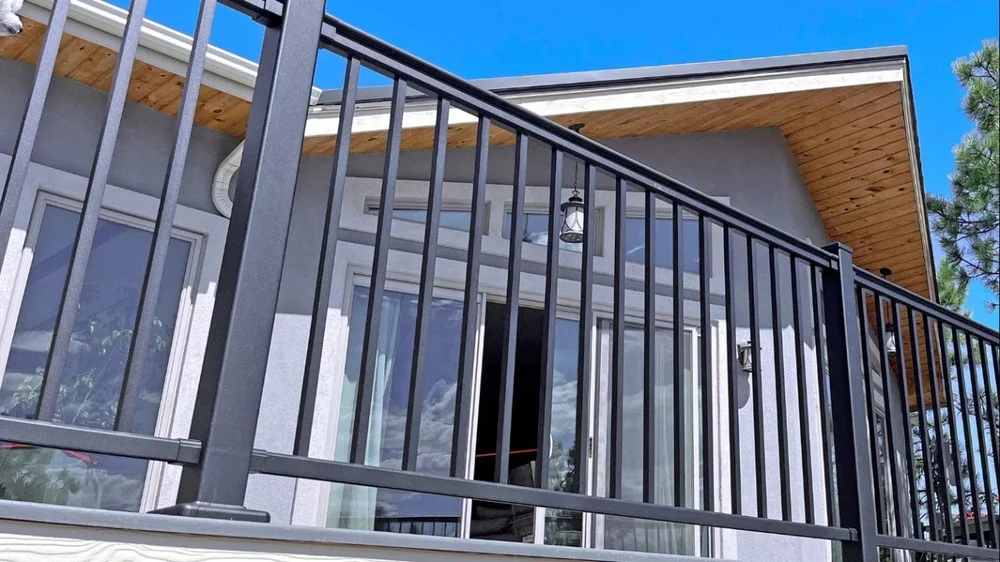
For homeowners in Greater Victoria, the deck isn’t just an addition to the house; it is the primary venue for West Coast living. Whether you are sipping coffee overlooking the Sooke Basin, hosting a summer BBQ in Saanich, or enjoying the sunset from a James Bay balcony, your railing system is the frame through which you see the world.
However, Victoria’s unique geography—ranging from high-wind coastal bluffs to salt-heavy harbor air—means that choosing a railing is a significant financial and structural decision. In 2026, aluminum remains the undisputed champion for Vancouver Island homes due to its immunity to rust and rot. But with styles ranging from traditional pickets to high-end cable and glass, costs can vary wildly.
This exhaustive guide breaks down everything you need to know about aluminum railing prices, BC Building Code requirements, and local installation factors to help you budget with total confidence.
💰 Quick Price Reference: 2026 Victoria Averages
If you are in the early planning stages, use this table as your baseline. These figures reflect professional-grade materials and expert installation in the Capital Regional District (CRD).
|
Railing Style |
Estimated Cost (Installed) |
Primary Benefit |
Maintenance Level |
|
Picket Railing |
$60 – $100 / LF |
Most affordable; high safety |
Near Zero |
|
Framed Glass |
$120 – $200 / LF |
Best windbreak; clear views |
Moderate (Cleaning) |
|
Cable Railing |
$120 – $200 / LF |
Modern aesthetic; high airflow |
Low (Tensioning) |
|
Stair Railing |
$150 – $250 / LF |
Required for safety & code |
Near Zero |
|
Privacy Walls |
$150 – $300 / LF |
Block wind & neighbor views |
Low |
Note: LF = Linear Foot. Prices include standard posts, top rails, and labor.
Section 1: Detailed Breakdown of Railing Styles
1. The Aluminum Picket Railing ($60 – $100 per linear foot)
Picket railings are the standard for most Victoria residential projects. They consist of vertical aluminum bars (pickets) spaced to prevent small objects—or adventurous pets—from passing through.
- Why the price varies: A basic 36-inch high railing in standard Black or White sits at the $60/LF mark. If your deck is more than 6 feet off the ground, the BC Building Code requires a 42-inch height, which pushes materials and labor toward $85–$100/LF.
- Best for: Families in the West Shore (Langford/Colwood) or Saanich looking for a “set it and forget it” solution that meets every safety requirement without breaking the bank.
2. Framed Glass Railings ($120 – $200 per linear foot)
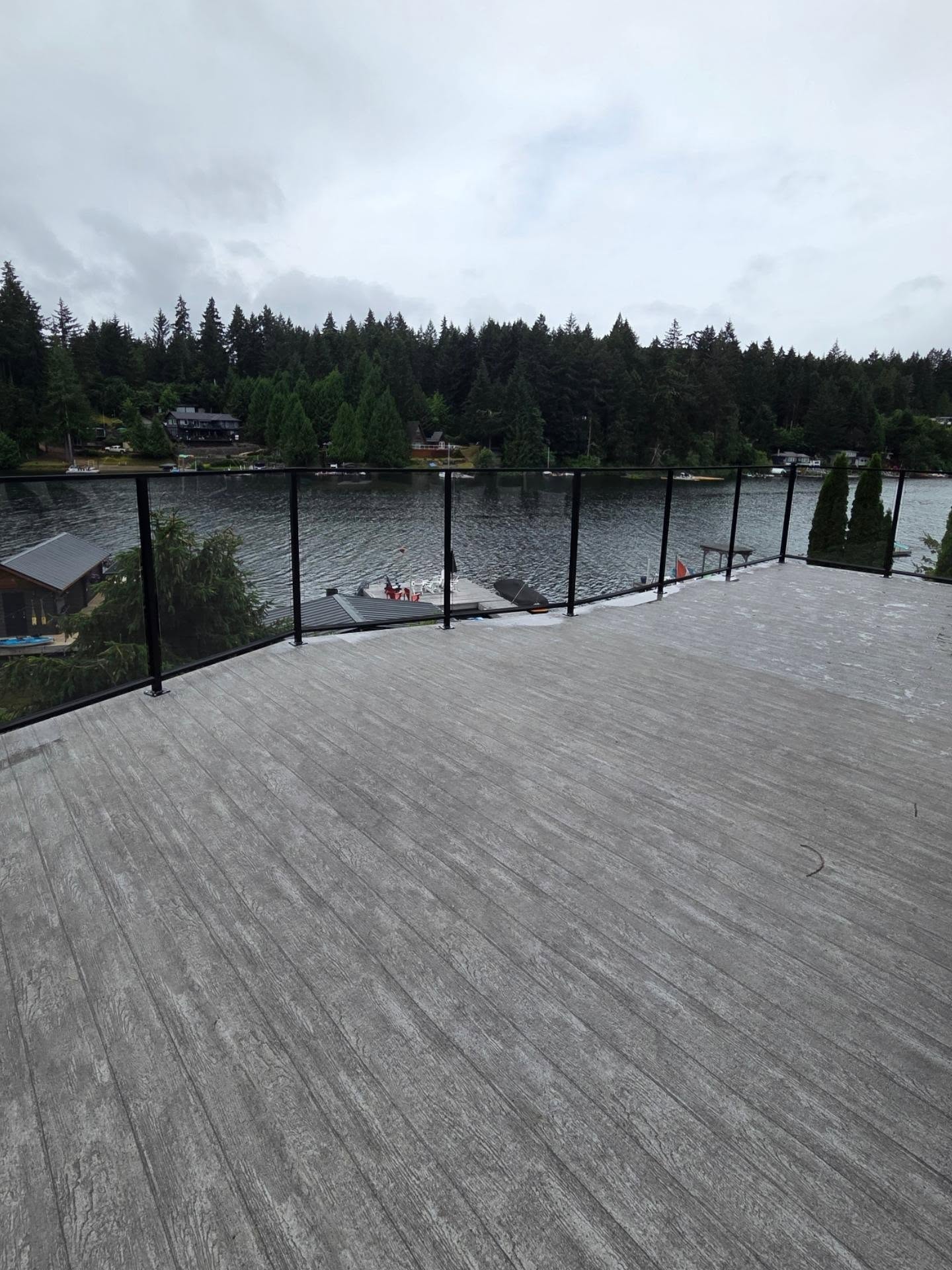
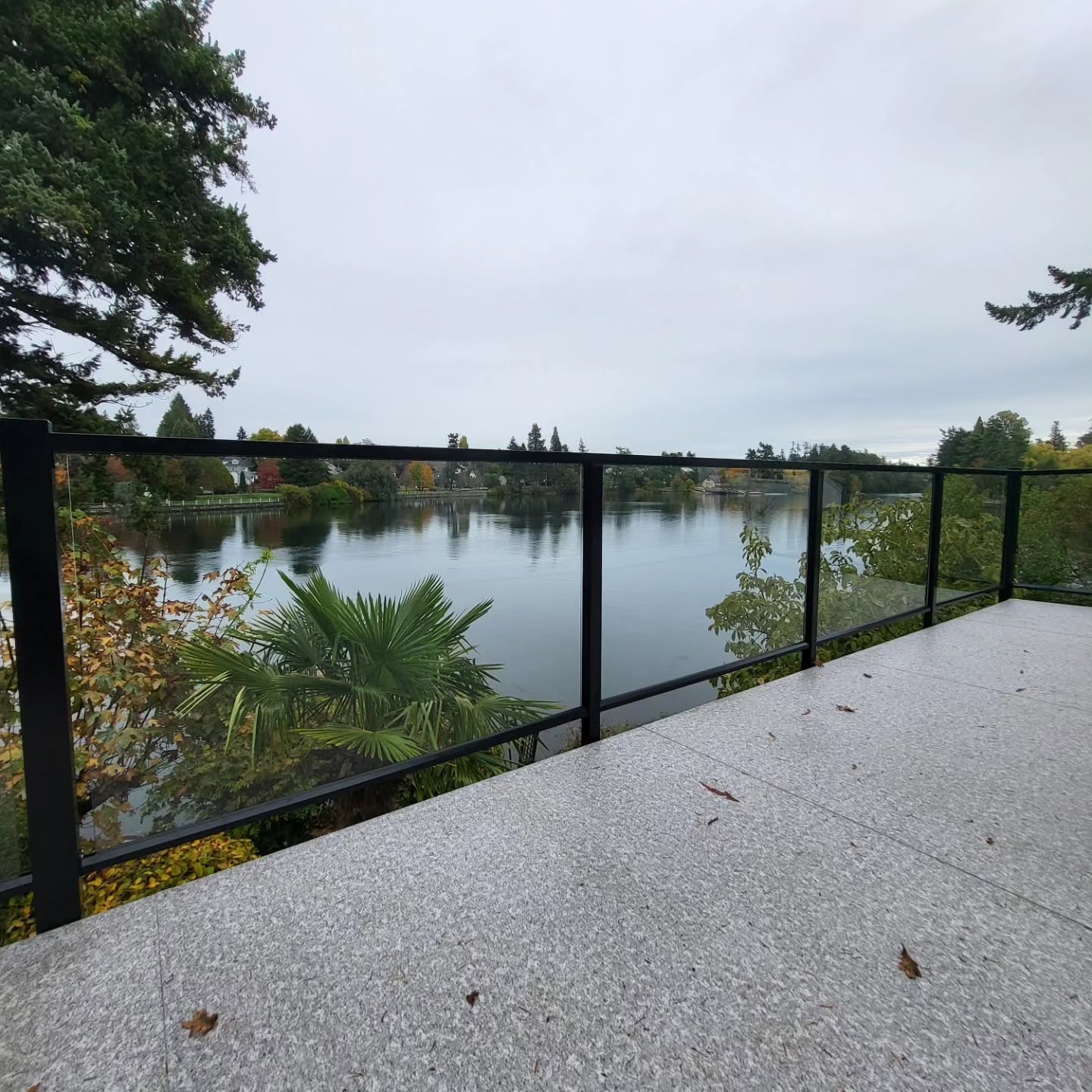
In a city famous for the Inner Harbour and the Olympic Mountain views, glass is king. These systems use aluminum frames to securely hold 6mm to 10mm tempered safety glass.
- The Victoria Advantage: Beyond the aesthetics, glass acts as a windbreak. For properties in Fairfield or Sidney that face the Juan de Fuca Strait, a glass railing can extend your “deck season” by several weeks by blocking chilly coastal breezes.
- Cost Drivers: Upgrading to tinted glass (for sun glare) or frosted glass (for privacy from neighbors in dense areas like Fernwood) will move you toward the $200/LF end of the spectrum.
3. Stainless Steel Cable Railings ($120 – $200 per linear foot)
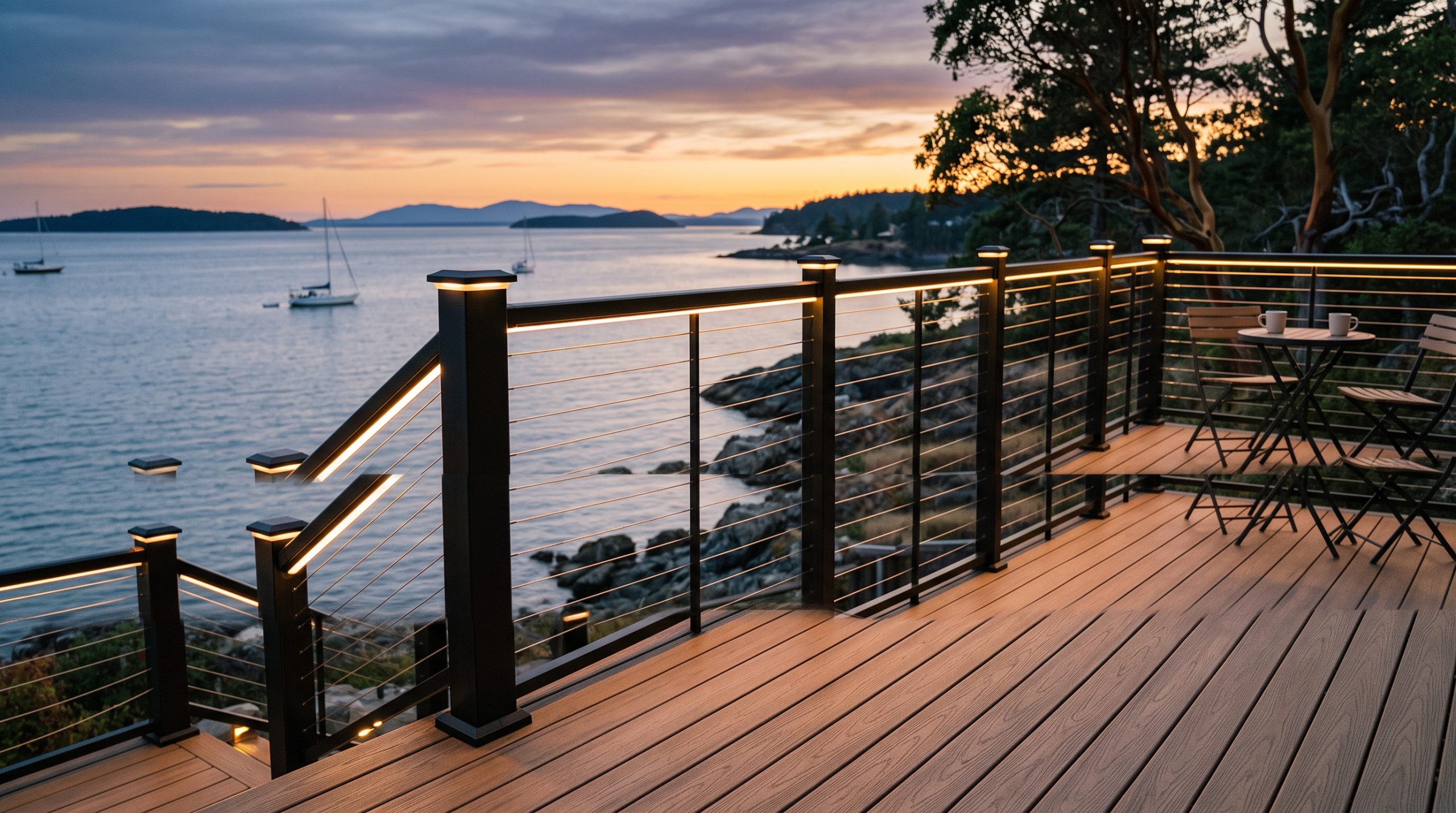
Cable railings offer a sleek, nautical look that perfectly complements “West Coast Modern” architecture. They use thin horizontal cables tensioned between heavy-duty aluminum posts.
- The Aesthetic: They provide the most “open” feel possible, allowing maximum airflow—perfect for hot summer days in the Highlands.
- Why they are premium: The hardware required for cable systems (tensioners, end-caps, and specialized posts) is more expensive than picket or glass components. Additionally, the labor to hand-tension each line is significant.
4. Custom Stairs ($150 – $250 per linear foot)
It is a common surprise for homeowners that stairs cost significantly more than flat deck sections.
- The Precision Factor: Every staircase in Victoria is different. Installers must use articulating brackets to match the specific “rise and run” of your steps.
- The Labor: Fitting a railing to a slope takes nearly twice as much time as a flat installation. In 2026, labor remains the biggest driver of stair railing costs.
Section 2: The "Victoria Factor" – Why Local Geography Matters
When you look at national averages for railing prices, they rarely account for the specific environmental stressors found on Vancouver Island.
1. Salt Spray & The 5km Rule
If your home is within 5 kilometers of the ocean, you live in a “High Corrosive Zone.” While aluminum doesn’t rust like steel, low-quality finishes can “pit” or “bubble” when exposed to salt air.
- Professional Insight: Quality Aluminum Railings uses AAMA-2604 compliant powder coating, which is specifically engineered to resist the salt-heavy air of Oak Bay and Sidney. Cheaper DIY kits from big-box stores often lack this rating, leading to finish failure within 3-5 years.
2. Wind Loads and Engineering
Victoria is a windy city. For glass railings on high-elevation decks (such as those in the Bear Mountain area), the wind acts like a giant sail against the glass.
The Cost Impact: In high-wind zones, your installer may need to use thicker 10mm or 12mm glass and more frequent post-spacing to ensure the system doesn’t whistle or, worse, fail during a winter gale.
Section 3: Understanding the BC Building Code (2024/2026 Standards)
Navigating the code isn’t just about passing an inspection; it’s about protecting your liability and the safety of your guests.
The 24-Inch Trigger
If your deck’s walking surface is 24 inches (600mm) or more above the ground, a guardrail is mandatory.
Height Requirements: 36" vs 42"
- 36-Inch (900mm) Height: Permitted for decks where the drop to the ground is less than 6 feet (1.8 meters).
- 42-Inch (1070mm) Height: Required for any deck where the drop is 6 feet or greater. This is the standard for almost all second-story balconies in Victoria.
The 4-Inch Sphere Rule
To prevent children from getting stuck or falling through, no gap in your railing (between pickets, under the bottom rail, or between glass panels) can allow a 4-inch (100mm) sphere to pass through.
Pro Tip: In 2026, the “Climbability Rule” has been relaxed for most residential decks under 13 feet high, finally making horizontal cable railings a widely accepted and code-compliant option across the CRD.
Section 4: Hidden Costs and Installation Variables
When reviewing a quote, keep an eye out for these five variables that can shift your total investment:
1. Surface Type (Mounting Method)
- Wood/Composite Decks: Usually the fastest to install on.
- Concrete Patios: Requires “core drilling” or hammer-drilling, which adds to the labor cost.
- Vinyl Membranes (Duradek): Crucial! If your deck has a waterproof vinyl membrane, your installer must use specialized flashing and sealants. Improper installation here will void your deck’s warranty and lead to rot in your house’s structure.
2. Fascia vs. Surface Mounting
- Surface Mount: Posts are bolted to the top of the deck.
- Fascia Mount: Posts are bolted to the side (rim joist) of the deck. This is popular for small balconies in Victoria because it doesn’t take up any floor space, but it typically adds $15–$25/LF due to the complex brackets required.
3. Permits and Municipal Fees
In Victoria and Saanich, a building permit is generally required for any new deck or significant structural change to a railing.
-
- Cost: Budget roughly $150–$300 for the permit application and roughly 1.4% of the total construction value for the permit itself.
4. Demolition and Disposal
Replacing an old wood railing? Don’t forget the cost of tearing it down and hauling it to the Hartland Landfill. Professional crews usually charge a flat fee for this service, typically ranging from $300 to $700 depending on the size of the deck.
Section 5: Working with Victoria Strata Councils
If you live in a condo or townhome (popular in areas like Langford or James Bay), you aren’t just dealing with the building code—you’re dealing with Strata Bylaws.
Under the BC Strata Property Act, any change to the exterior of the building (including railings) requires written approval from the Strata Council.
- Uniformity: Most Stratas require all units to have the exact same color and style of railing.
- White-Label Services: At Quality Aluminum Railings, we often work with Strata Councils to provide uniform, high-volume pricing for entire buildings, which can lower the cost per unit significantly.
Section 6: How to Save Money (Without Cutting Corners)
- Standardize Your Colors: Custom “Slate” or “Sage” colors look great, but they come with a “Setup Fee” from the powder-coater. Sticking to Black or White can save you 15-20% on materials.
- The “View Mix”: Use glass on the side of the deck facing the ocean or mountains, and use pickets on the sides facing the neighbor or the street. This balances the view with the budget.
- Long-Term ROI: Remember that while wood is cheaper today, the maintenance costs (staining and sealing) every two years in Victoria’s wet climate will eventually make it more expensive than aluminum by year six.
🗓️ 2026 Maintenance Checklist for Aluminum Railings
To ensure your warranty remains valid and your railings look pristine for decades, follow this simple routine:
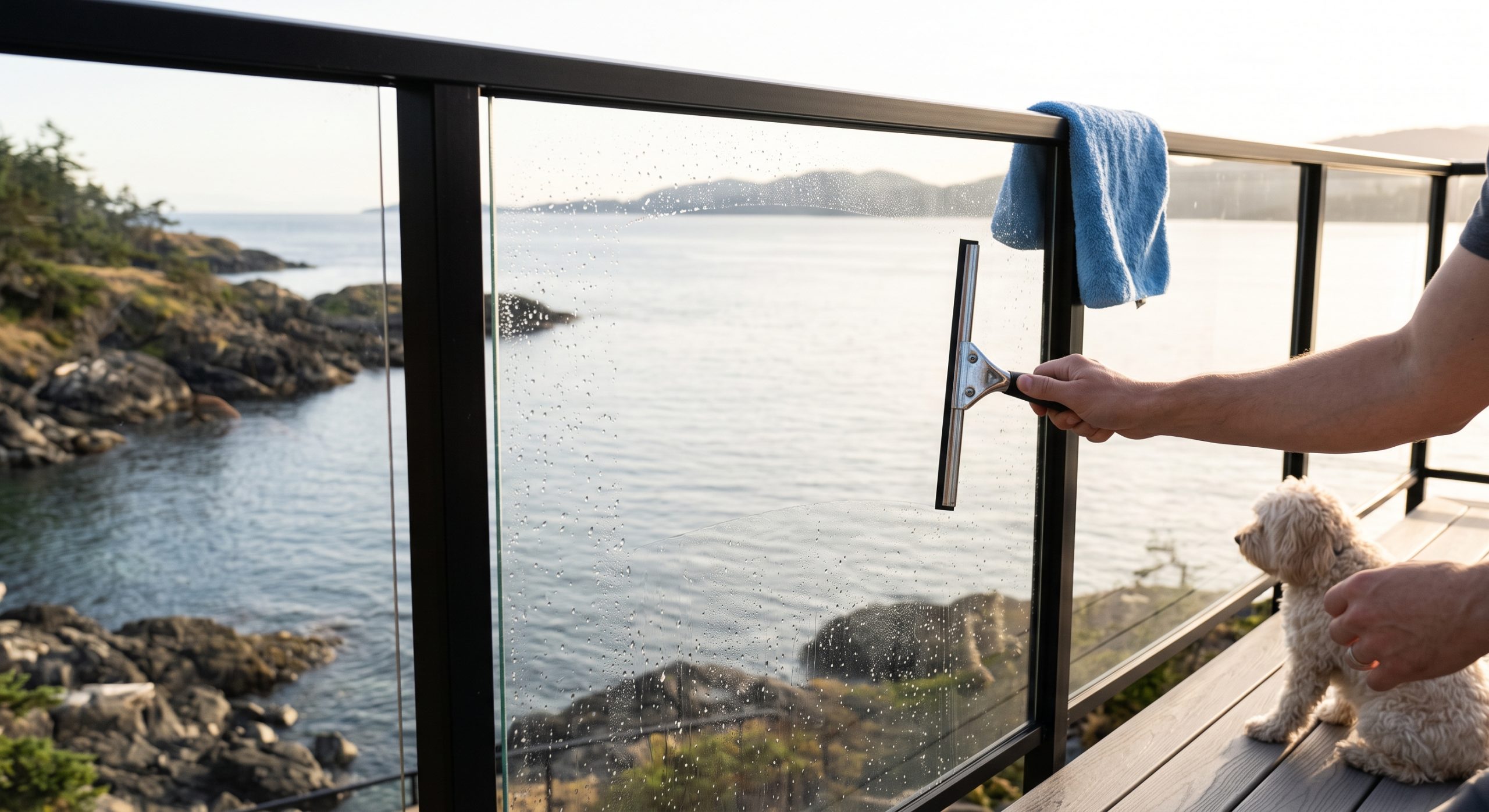
- Twice Yearly (March & October): Wash with a soft cloth and mild soap (like Dawn). This removes the salt crystals and environmental pollutants that can dull the finish over time.
- Annual Inspection: Check the base plate covers to ensure they are seated correctly. If you have cable railings, check the tension to ensure they still meet the “4-inch rule.”
Avoid Harsh Chemicals: Never use abrasive pads or heavy solvents, as these can scratch the protective powder coating and invite corrosion.
Final Thoughts: Choosing the Right Victoria Contractor
Your home is likely your biggest asset. When choosing a railing partner, look for:
- WCB Coverage: Protects you if a worker is injured on your property.
- Liability Insurance: Essential for protecting your home during the installation process.
- Local Experience: A contractor who understands the difference between a deck in wind-swept Metchosin and a sheltered patio in Esquimalt.
At Quality Aluminum Railings, we pride ourselves on being “soft-spoken” experts. We don’t believe in high-pressure sales because we know that a well-designed, code-compliant railing system sells itself. We live and work in Victoria, and we build every project to withstand the specific challenges of our beautiful Island home.
Ready for a quote that respects your budget and your home? Visit Quality Aluminum Railings to schedule your free on-site estimate.