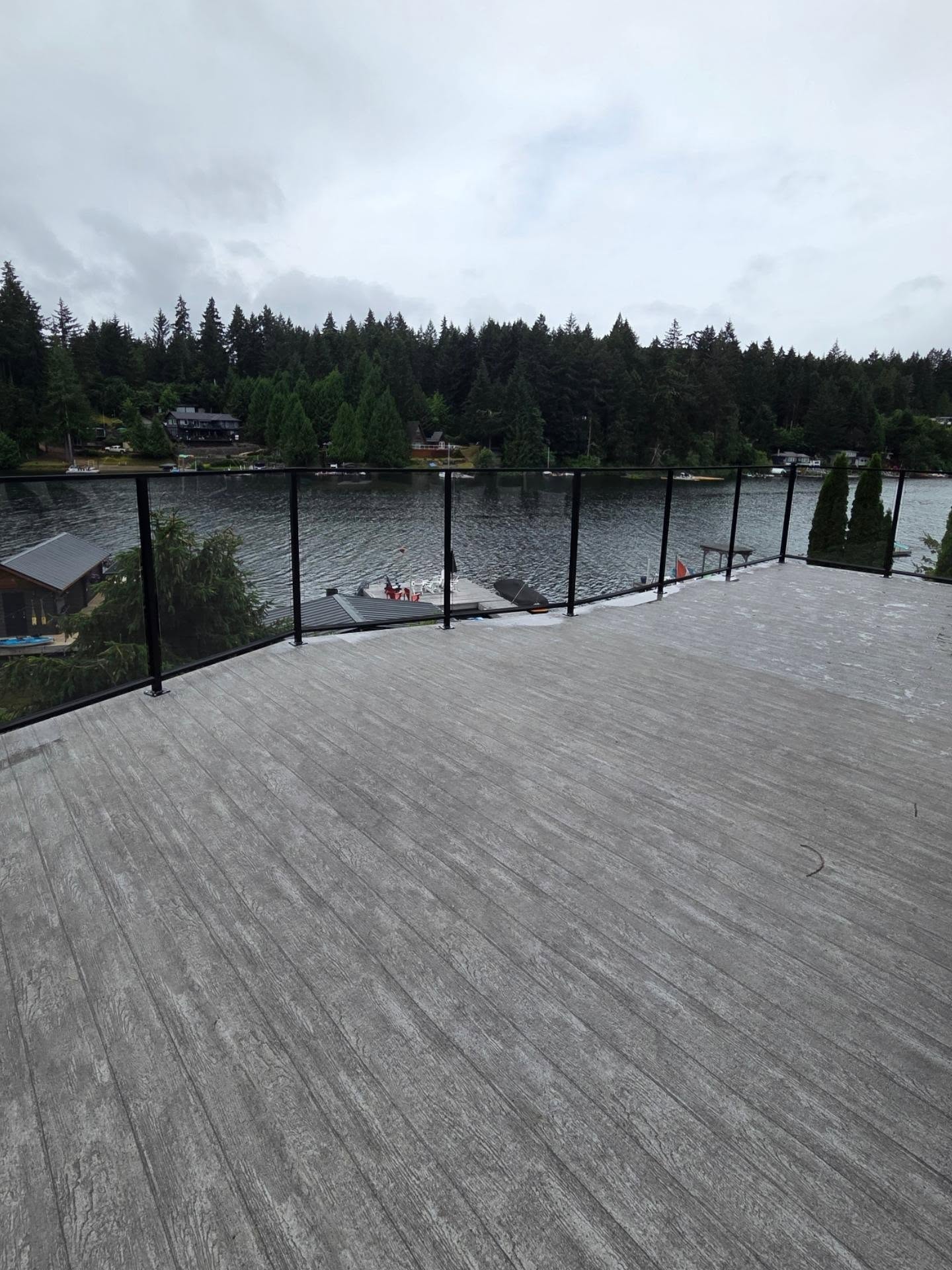
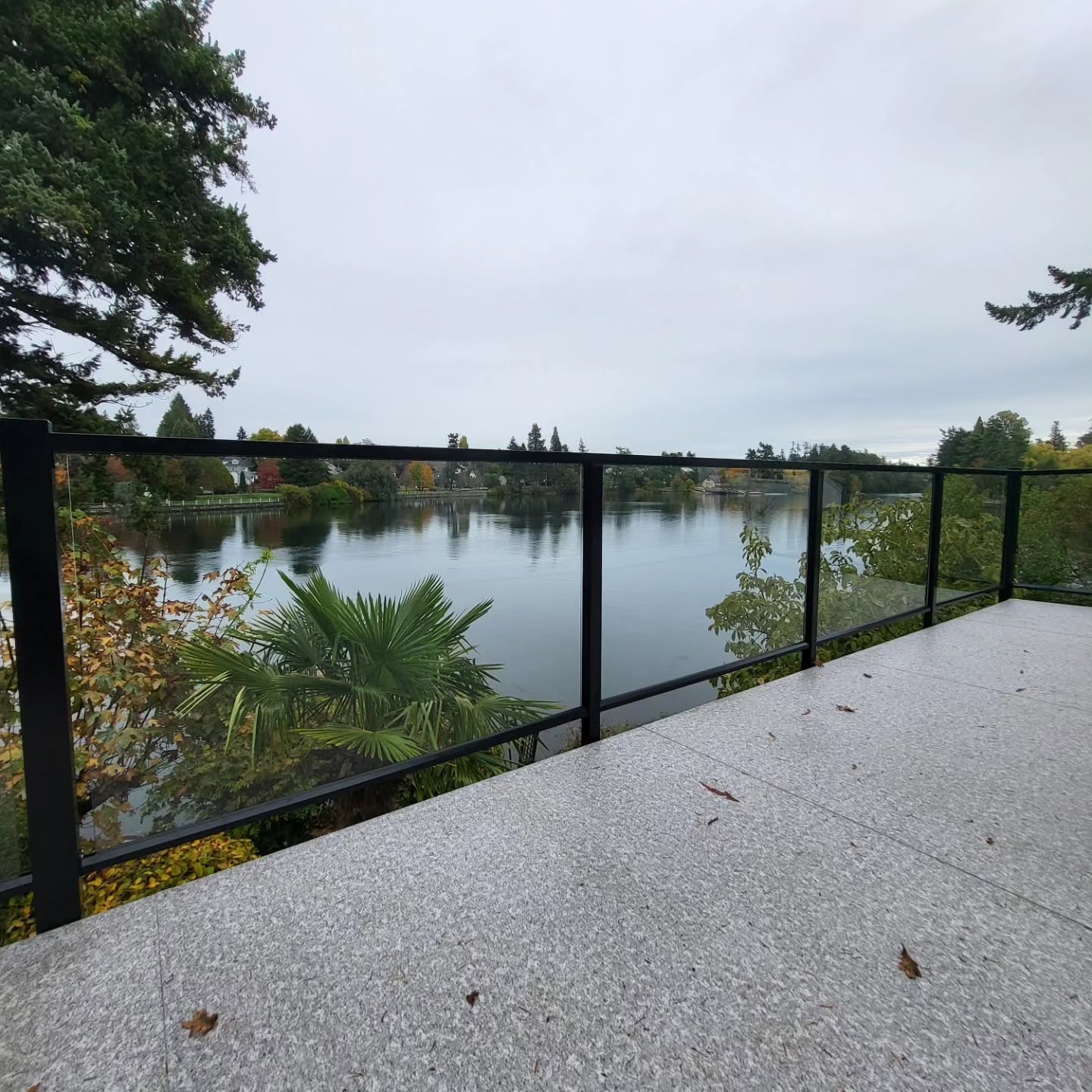
If you live in Victoria, Sidney, or anywhere along the Saanich Peninsula, you know that the ocean is both our greatest neighbor and our biggest maintenance challenge. The same salt air that makes a morning walk along Dallas Road so refreshing is silently working to dismantle the metal fixtures on your home.
When it comes to choosing railings for your deck, patio, or stairs, the debate usually narrows down to two heavyweights: Aluminum and Wrought Iron.
Both offer a classic look, but in a coastal environment like Vancouver Island, they perform very differently over time. If you are trying to decide which material will actually stand up to the salt spray and humidity without requiring a paintbrush in your hand every two years, this deep dive is for you.
The Science of the "Salt Attack"
To understand why one metal fails while the other thrives, we have to look at the chemistry of the coast. Victoria’s air is laden with chloride ions from the Pacific Ocean. These ions are incredibly aggressive; they don’t just sit on the surface of your railings—they actively seek out microscopic cracks in paint or finish to begin the process of oxidation.
How Wrought Iron Corrodes
Wrought iron is an iron alloy with a very low carbon content. While it is incredibly strong and heavy, it is fundamentally “iron.” When iron is exposed to oxygen and moisture (especially salt water), it creates iron oxide—better known as rust.
The problem with rust isn’t just the orange stain. Rust is “expansive.” As it forms, it occupies more space than the original metal, causing the paint to bubble, crack, and flake off. This exposes even more metal to the air, creating a destructive cycle that eventually compromises the structural integrity of the railing.
How Aluminum Protects Itself
Aluminum is a non-ferrous metal, meaning it contains no iron. When aluminum is exposed to air, it doesn’t rust. Instead, it undergoes a process called oxidation, but with a very different result.
It creates a thin, microscopic layer of aluminum oxide on its surface. Unlike rust, which is flaky and porous, this oxide layer is hard, transparent, and—most importantly—airtight. It actually seals the underlying metal from further damage. When we add a high-quality powder-coated finish to aluminum, you essentially have a double-layer of protection that salt air struggles to penetrate.
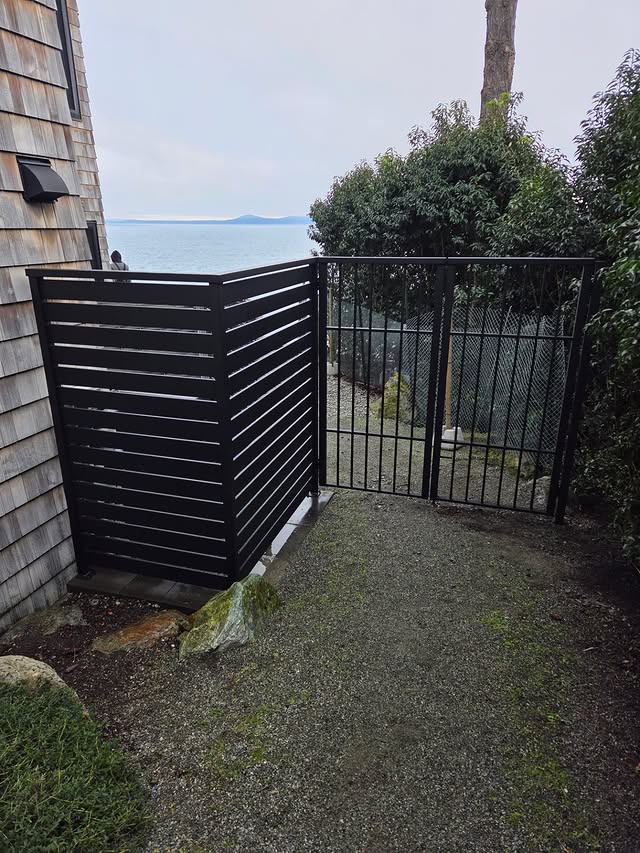
Maintenance Realities: A Tale of Two Weekends
In a climate like ours, the “maintenance-free” label is often thrown around loosely. Let’s look at what the next 10 years actually look like for both materials.
Maintaining Wrought Iron in Victoria
If you choose wrought iron for a home in a coastal area like Oak Bay or James Bay, you are signing up for a recurring hobby.
Inspection: Every spring, you must inspect every joint and scroll for “spidering” (tiny cracks in the paint).
Sanding: If you find rust, you can’t just paint over it. You have to sand it down to the bare, shiny metal.
Priming: You need a high-quality, zinc-rich primer.
Painting: You’ll need to apply an oil-based outdoor enamel.
Even with perfect maintenance, the “rust-bleed” usually starts at the points where the railing is bolted into your deck or at the weld points.
Maintaining Aluminum Railings
For aluminum, the maintenance list is significantly shorter:
Rinse: Use a garden hose to wash off salt deposits every few months (or after a big storm).
Wash: Once or twice a year, use a bucket of warm water and a mild, non-abrasive soap (like Dawn) to wipe down the surface.
That’s it. Because the powder-coating is baked onto the aluminum at high temperatures, it acts more like a “skin” than a layer of paint. It doesn’t peel or flake under normal coastal conditions.
Comparing the Costs: Upfront vs. Lifecycle
When homeowners look at quotes, wrought iron often seems like a premium, “old-world” choice, while aluminum is seen as the modern, efficient alternative. But the true cost of a railing isn’t the number on the invoice—it’s the cost per year of service.
The Wrought Iron Lifecycle Cost
Initial Cost: Generally higher due to the weight of the material and the labor-intensive welding process.
Annual Maintenance: Even if you do the work yourself, the cost of specialized primers, paints, and sandpaper adds up. If you hire a professional to sand and repaint a wrought iron railing system every 5 years, you could easily spend the original cost of the railing again within 15 years.
Longevity: In a salty environment, wrought iron that isn’t perfectly maintained can become structurally unsafe in 15–20 years.
The Aluminum Lifecycle Cost
Initial Cost: Competitive. Because aluminum is lighter and easier to extrude into specific shapes, the installation is often faster and less expensive.
Annual Maintenance: Nearly zero.
Longevity: Aluminum railings can easily last 30+ years in Victoria without any loss of structural strength. When you factor in the “saved” weekends and the lack of repainting costs, aluminum is significantly cheaper over its lifespan.
| Feature | Wrought Iron | Powder-Coated Aluminum |
| Rust Resistance | Low (Requires constant sealing) | Excellent (Naturally rust-proof) |
| Weight | Very Heavy | Lightweight |
| Maintenance | High (Sanding/Painting) | Low (Soap and Water) |
| Customization | High (Hand-forged) | High (Modular and Custom) |
| Coastal Suitability | Poor | Ideal |
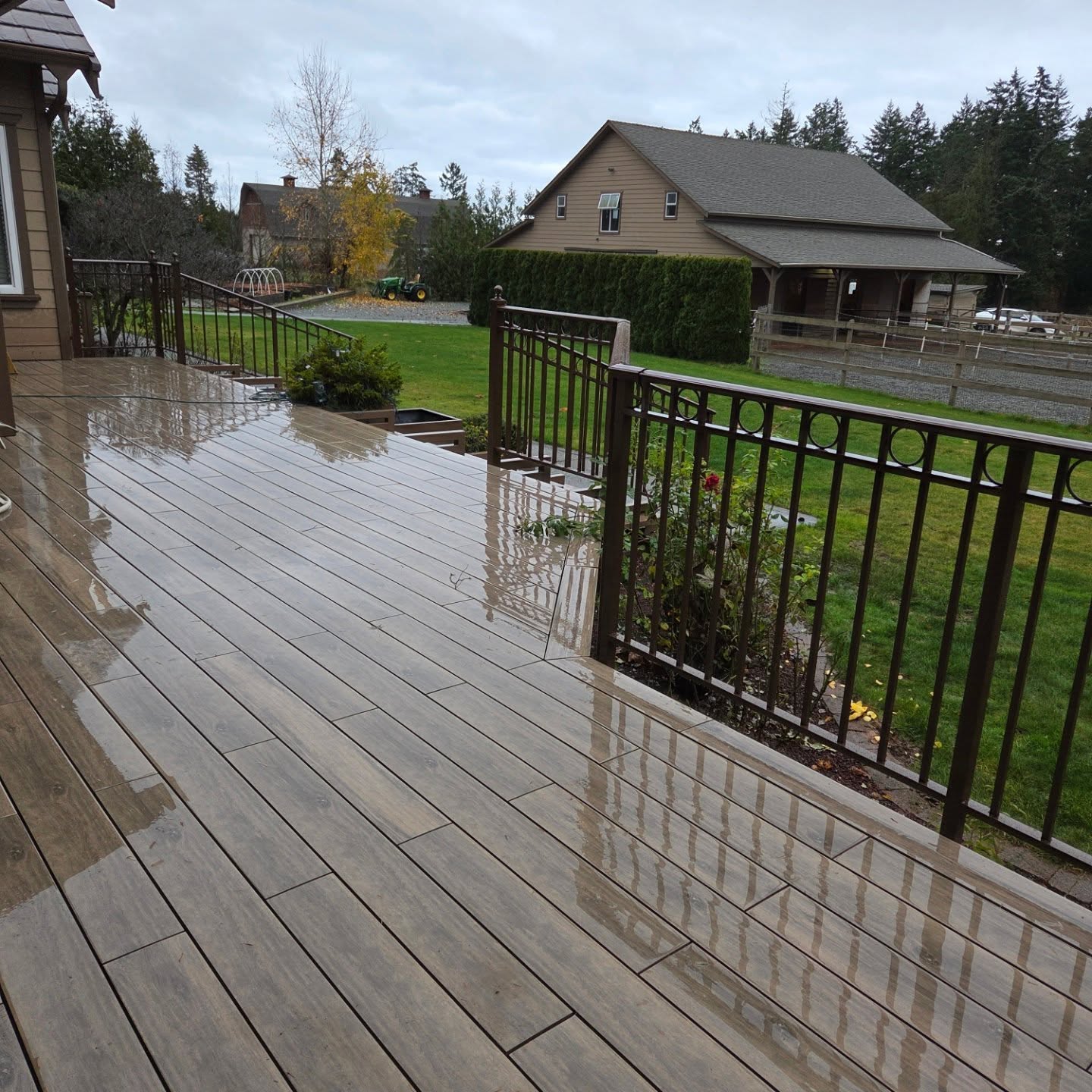
Aesthetics: Modern vs. Traditional
There is a common misconception that aluminum railings only come in “skinny, cheap-looking” styles. While that might have been true 20 years ago, modern engineering has changed the game.
The Wrought Iron Look
Wrought iron is famous for its ornate scrolls and heavy, solid feel. It suits heritage homes—of which Victoria has many. However, the “heavy” look can sometimes block the very views we pay so much for on the Island.
The Modern Aluminum Look
Today’s aluminum systems can mimic the look of traditional wrought iron (using “picket” styles with decorative collars) or lean into the modern aesthetic with glass inserts or cable railings.
Views: Because aluminum is so strong, the posts and rails can be kept slim, allowing for “maximized view” designs that are perfect for ocean-front properties.
Color: Powder-coating allows for a massive range of colors—from classic textured black and “Victoria Heritage” greens to modern whites and greys—that stay vibrant despite the high UV exposure we get in the summers.
Safety and the BC Building Code
In British Columbia, railing safety isn’t just a suggestion; it’s a legal requirement. The BC Building Code (BCBC) specifies exactly how much force a railing must be able to withstand and how high it must be.
Both materials can meet these codes, but they do so differently.
Iron relies on its mass and heavy welds. However, if those welds rust internally (which often happens where the picket meets the bottom rail), the railing can look fine but fail the moment someone leans their full weight against it.
Aluminum systems are engineered with specific “load ratings.” Because the material doesn’t degrade internally from rust, an aluminum railing that was safe on Day 1 is almost certainly still safe on Day 3,000.
The Environmental Choice: Recycling and Sustainability
For many homeowners on the Island, the environmental impact of their renovation matters.
Iron is recyclable, but the process of smelting it and the chemicals used in the constant repainting (VOCs in oil-based paints) have a notable footprint.
Aluminum is one of the most recycled materials on earth. Around 75% of all aluminum ever produced is still in use today. It takes 95% less energy to recycle aluminum than it does to produce primary aluminum from ore. Choosing a long-lasting material that never needs chemical-laden paint is a win for the local ecosystem.
FAQs for Victoria Homeowners
1. Does aluminum get hot in the sun?
Aluminum is an excellent conductor of heat, but it also cools down very quickly. While a black aluminum railing will get warm in the direct July sun, it usually stays within a safe temperature range. Choosing a lighter color or a textured finish can further reduce heat absorption.
2. Can I install aluminum railings myself?
Yes, many aluminum systems are modular and designed for straightforward installation. However, because of the slopes and technical angles often found on Victoria’s rugged coastal lots, professional installation ensures that the railing meets BC Building Code safety standards and that the fasteners are properly sealed against salt water.
3. What is "Powder-Coating" and why is it better than paint?
Think of paint as a layer that sits on the metal. Think of powder-coating as a finish that is bonded to it. The powder is electrostatically applied and then baked in an oven to create a hard, continuous barrier. In Victoria’s salt air, paint will eventually peel; powder-coating is designed to resist that.
4. Is aluminum strong enough for high-wind areas?
Absolutely. Aluminum is used to build airplanes and skyscrapers for a reason. When properly engineered and anchored, aluminum railing systems can withstand the intense wind loads we experience during our winter storms in places like Fairfield or Gordon Head.
5. Why do some old aluminum railings look chalky?
That “chalky” look is usually a sign of an old, lower-quality finish from decades ago. Modern high-performance powder coatings are UV-stabilized, meaning they won’t fade or “chalk” even after years of exposure to the Island’s sun and salt.
The Verdict: Which Survives?
While wrought iron has a undeniable historic charm, it is simply not built for the “salt-and-spray” reality of coastal life. It requires a level of vigilance and manual labor that most modern homeowners don’t want to commit to.
Aluminum is the clear winner for Victoria’s coastal air. It offers the perfect intersection of durability, safety, and aesthetics. It doesn’t rust, it doesn’t peel, and it lets you spend your weekends enjoying the view rather than painting it.
If you are looking to upgrade your home’s exterior with a solution that is truly “set it and forget it,” aluminum is the investment that pays for itself in both home value and peace of mind.