Beyond Safety — Why Style Defines Your Railing Choice
When most people think about adding or replacing railings, safety is the first word that comes to mind. After all, railings are required by building codes, and they play a vital role in preventing falls. But if you stop at safety, you’re missing out on half the story.
The style of your aluminum railing can transform your outdoor living space from “functional” to “beautiful.” The right railing creates a frame for your view, enhances your home’s curb appeal, and even influences how much time you enjoy spending on your deck or balcony.
In British Columbia — especially in Victoria and coastal Vancouver Island communities — homeowners have unique challenges when choosing railings. Salt air, heavy rain, and windy conditions all play a role. So does the natural beauty of the setting. No one wants to block an ocean, mountain, or forest view with the wrong choice of railing.
This guide dives deep into three of the most popular aluminum railing infill styles: picket, cable, and glass. We’ll look at their strengths, weaknesses, maintenance requirements, and where each works best. By the end, you’ll have the clarity you need to choose a railing that matches your home, budget, and lifestyle.
Why Aluminum is the Best Base Material
Before we get into style choices, let’s start with the foundation: the frame. Many railing systems use wood, vinyl, or steel. But in BC, aluminum consistently comes out ahead.
Strength Without Bulk
Aluminum railings are engineered to meet and exceed building code standards, providing the required load resistance without the bulk of heavy steel posts.
Why Aluminum is the Best Base Material
Before we get into style choices, let’s start with the foundation: the frame. Many railing systems use wood, vinyl, or steel. But in BC, aluminum consistently comes out ahead.
Strength Without Bulk
Aluminum railings are engineered to meet and exceed building code standards, providing the required load resistance without the bulk of heavy steel posts.
Corrosion Resistance in Coastal Areas
Unlike untreated steel, aluminum doesn’t rust. In Victoria, where salty ocean air accelerates corrosion, aluminum with a high-quality powder-coated finish lasts decades without degrading.
Design Versatility
Aluminum railings come in a wide range of finishes, colors, and profiles. This makes it possible to match nearly any architectural style — from heritage-style homes in James Bay to modern West Coast builds in Saanich or Sidney.
Low Maintenance
Wood railings require sanding and staining. Steel railings need ongoing rust prevention. Vinyl can warp or crack. Aluminum railings, by contrast, only need the occasional rinse and wipe to look like new.
Style Option 1: Picket Railings
What Are Picket Railings?
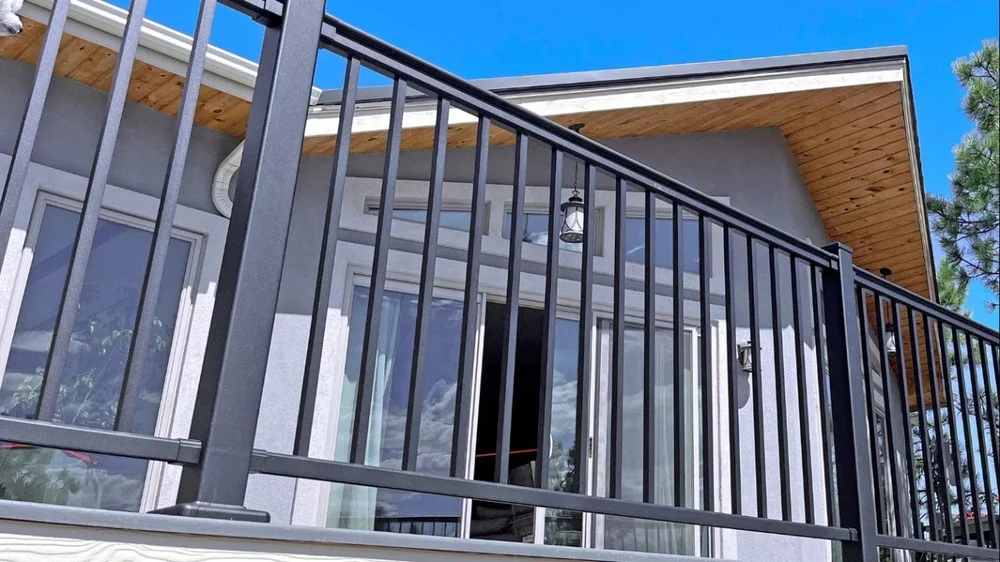
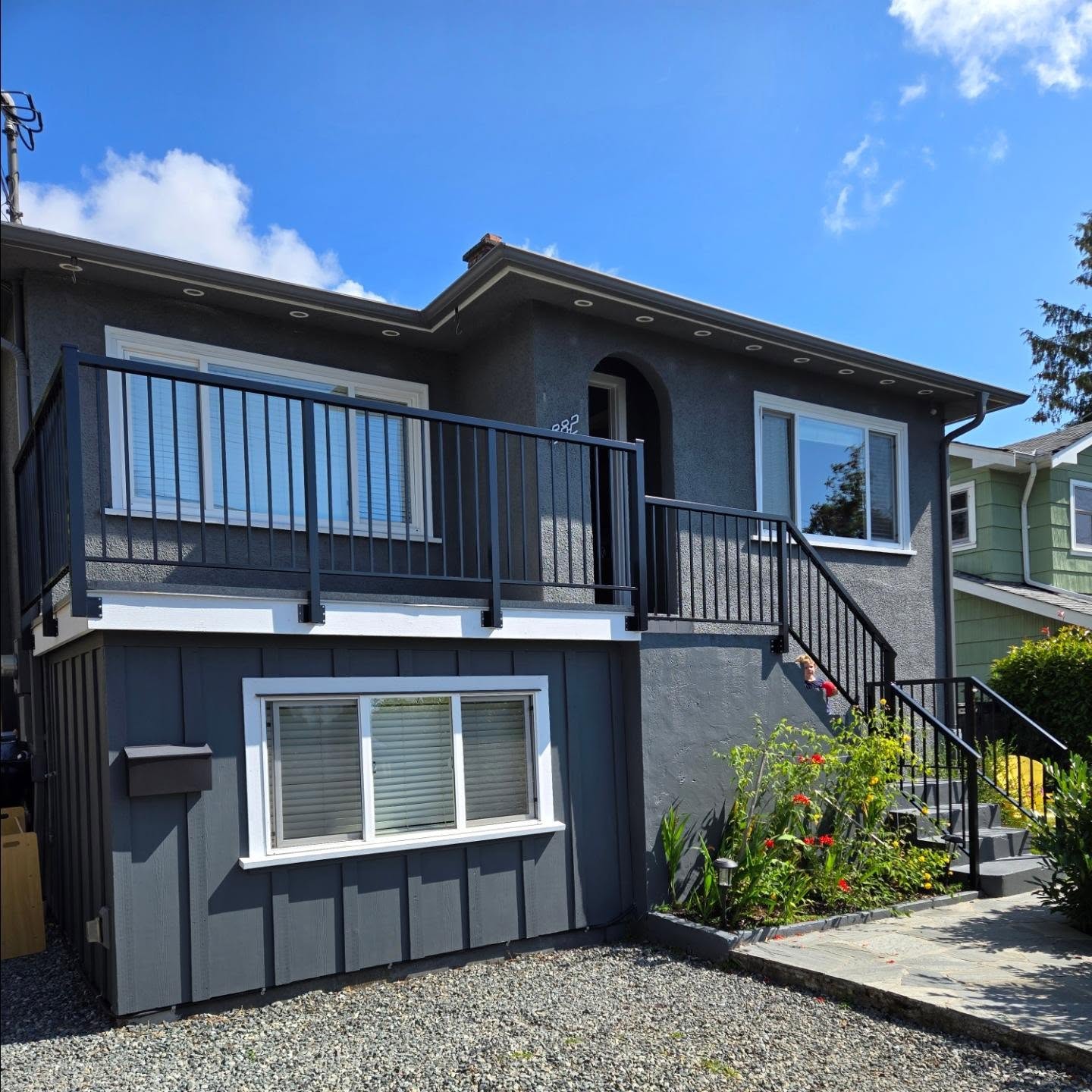
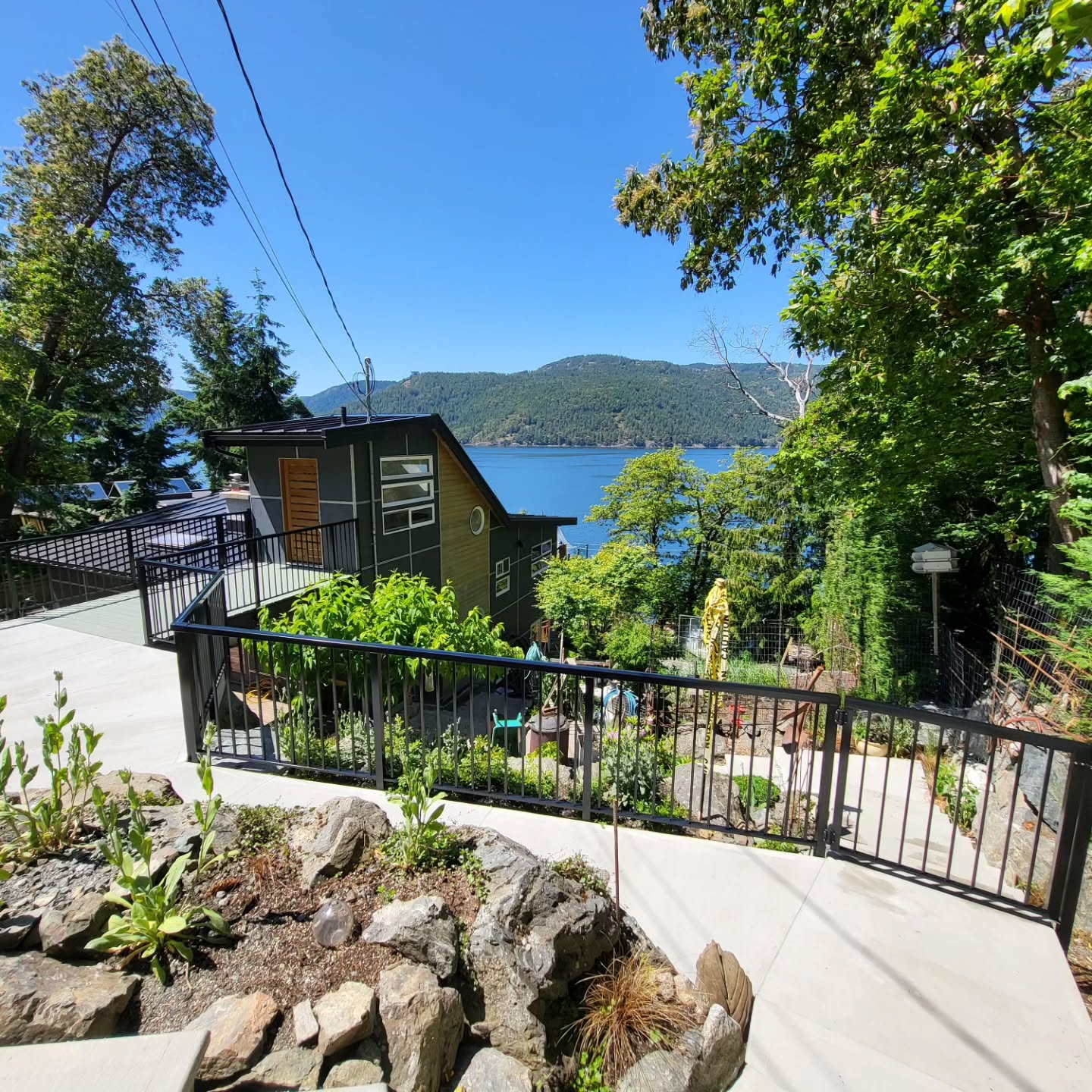
Picket railings use vertical balusters — often called “pickets” — spaced evenly between a top and bottom rail. They’re one of the oldest and most familiar railing styles, but with aluminum, they’ve evolved into a durable and stylish choice.
Variations in Picket Design
- Traditional straight pickets: Square or rectangular balusters, powder-coated in black, white, or bronze.
- Decorative pickets: With twists, curves, or knuckles for a more ornamental look.
- Slimline pickets: Narrower balusters for a less obstructive view.
- Mixed-material pickets: Aluminum combined with wood or glass accents for a transitional design.
Pros of Aluminum Picket Railings
- Affordability: Usually the lowest cost among railing options.
- Versatility: Complements almost any home style — from heritage to modern.
- Safety: Excellent choice for families with children and pets, as vertical lines prevent climbing.
- Durability: Powder-coated aluminum pickets won’t splinter, crack, or peel.
Cons of Aluminum Picket Railings
- View obstruction: Vertical pickets create a visual barrier compared to cable or glass.
- Less “wow factor”: Doesn’t offer the same modern or upscale look as other options.

Style Option 2: Cable Railings
What Are Cable Railings?
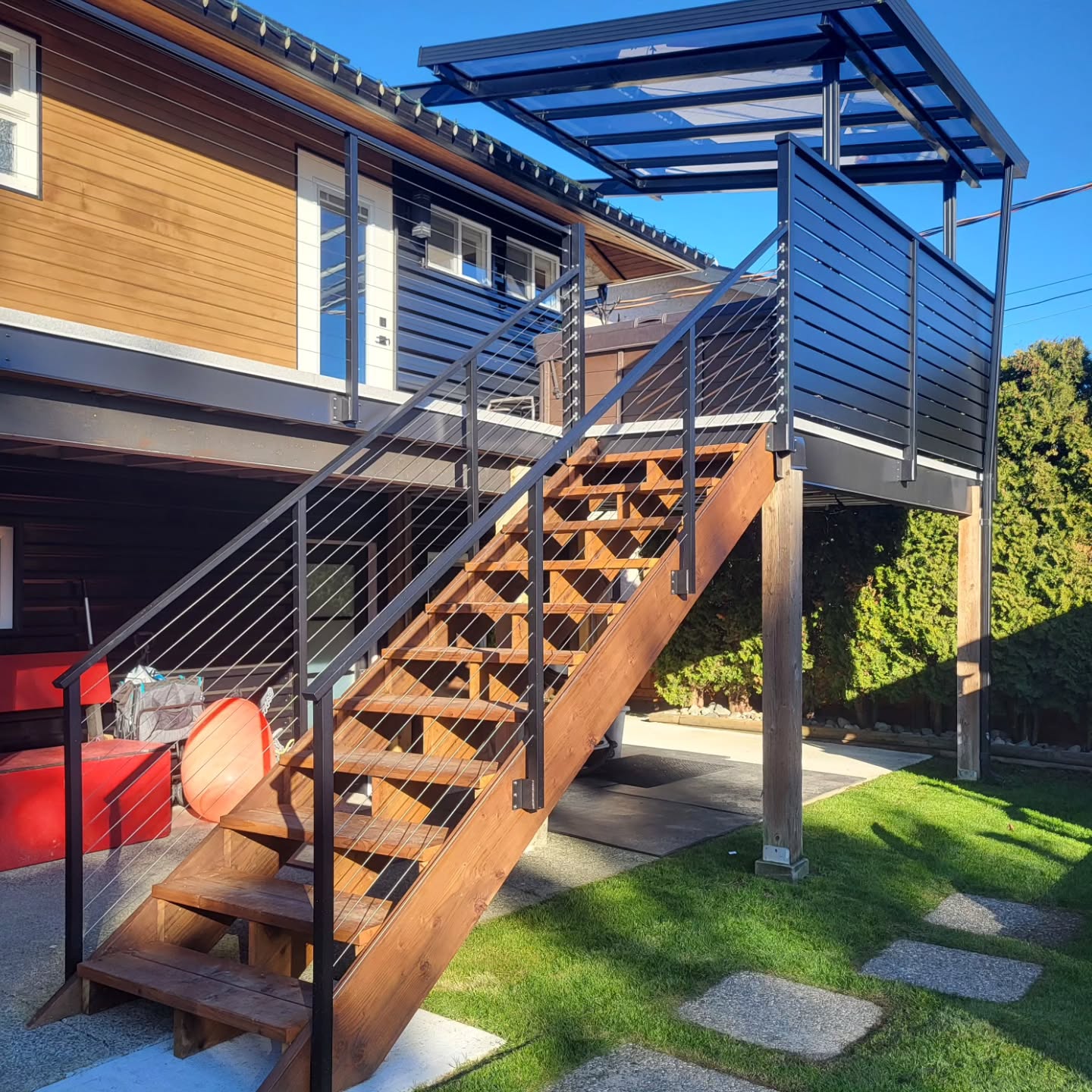
Cable railings use stainless steel cables strung horizontally between aluminum posts. The cables are tensioned to provide a safe, strong barrier while minimizing obstruction of the view.
Variations in Cable Design
- Horizontal cables: The most common choice, creating sleek modern lines.
- Mixed infill: Cable combined with glass sections for privacy where needed.
- Color-coordinated posts: Aluminum frames available in matte black, charcoal, or bronze to complement the cable’s shine.
Pros of Aluminum Cable Railings
- Unobstructed view: Thin cables are nearly invisible, especially when viewed against water or trees.
- Modern appeal: Sleek lines fit contemporary or minimalist home styles.
- Air flow: Unlike glass, cable doesn’t block breezes — ideal for hot summer decks.
- Durability: Stainless steel resists weathering and corrosion.
Cons of Aluminum Cable Railings
- Cost: Higher than picket systems due to hardware and installation.
- Maintenance: Cables require periodic tension adjustments.
- Child safety considerations: Horizontal cables can be tempting for kids to climb.
Style Option 3: Glass Infill Railings
What Are Glass infill Railings?
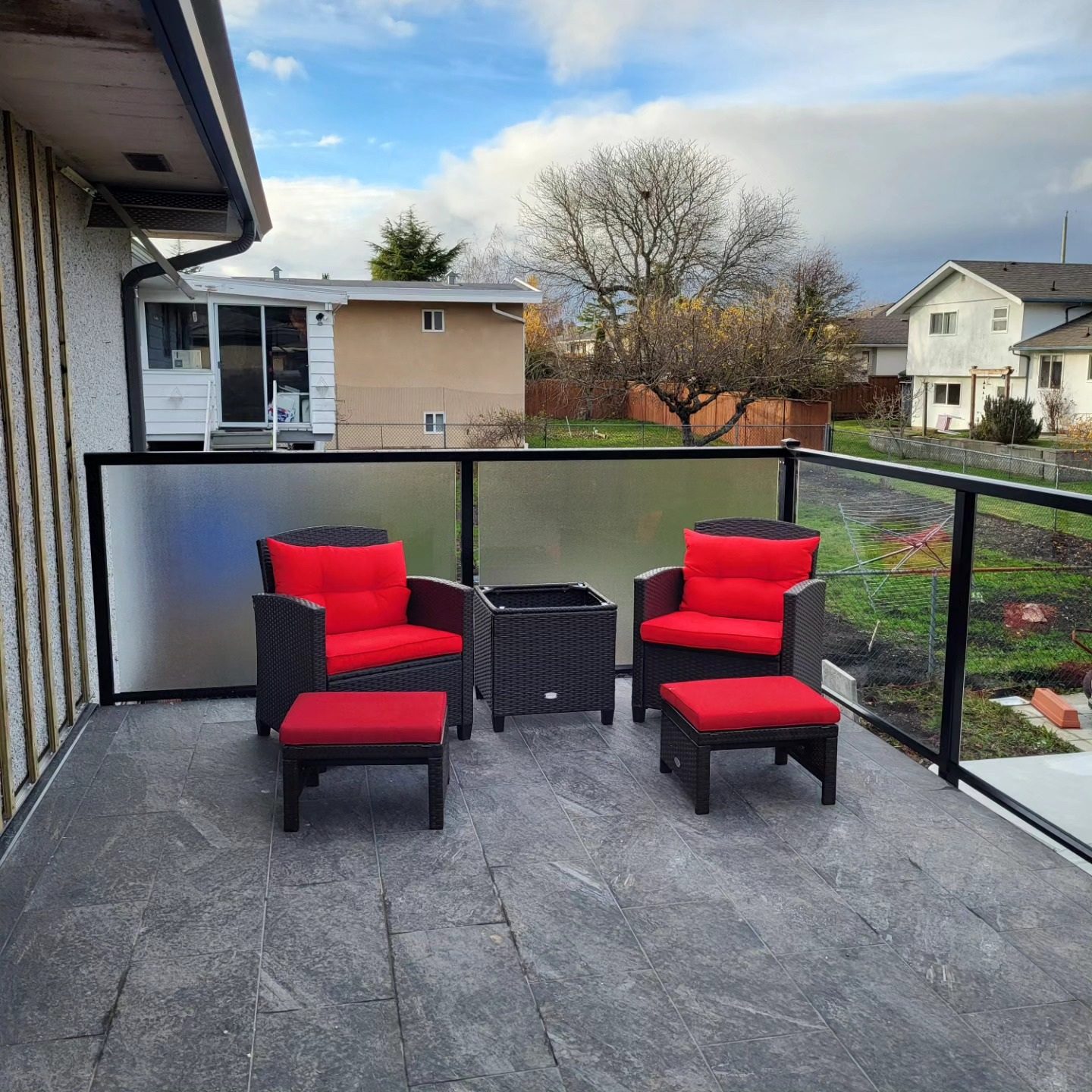
Glass infill railings use tempered safety glass panels instead of pickets or cables. These panels are secured within an aluminum frame or clamped with top and bottom rails.
Variations in Glass Design
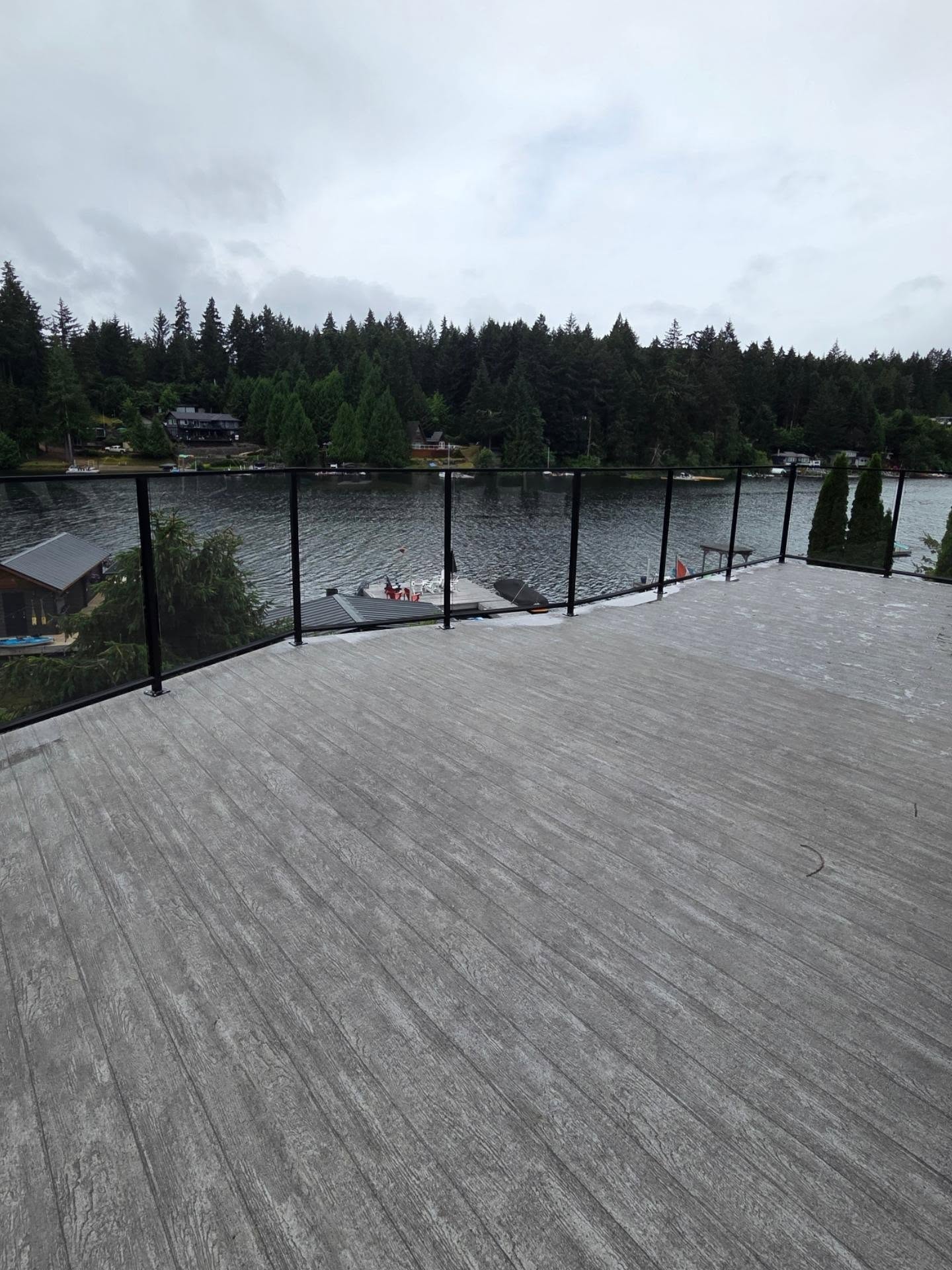
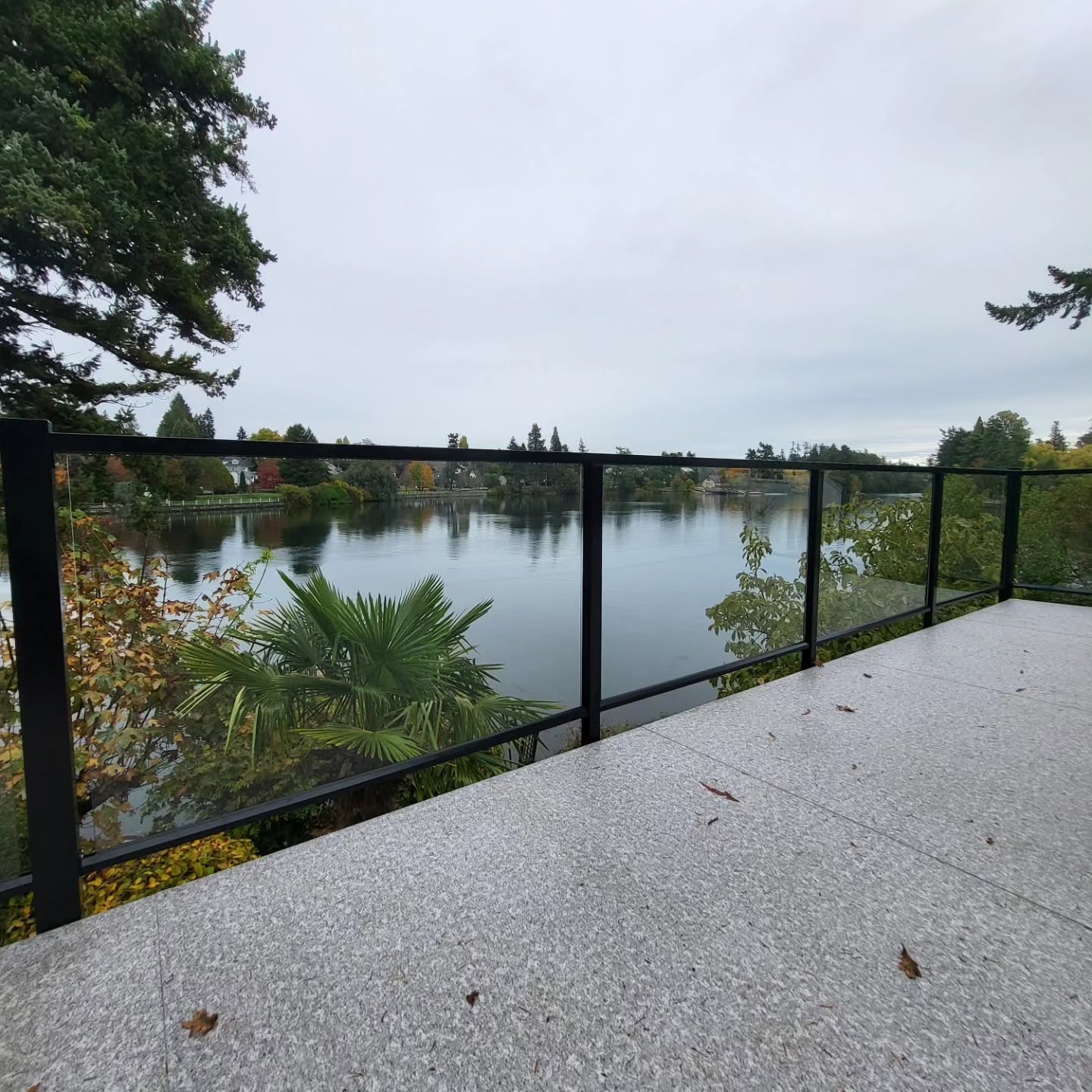
- Clear glass: Maximum view with minimal obstruction.
- Tinted glass: Reduces glare and adds privacy.
- Frosted or etched glass: Provides privacy while letting in light.
- Frameless or semi-frameless systems: Minimize visible framing for a sleek look.
Pros of Aluminum Glass Railings
- Unmatched visibility: Perfect for homes with beautiful views.
- Wind protection: Glass panels block wind, making decks more comfortable.
- Upscale look: Adds value to high-end properties.
- Customizable: Tint, frost, or etching allow for personalization.
Cons of Aluminum Glass Railings
- Cost: Usually the most expensive style.
- Cleaning: Requires regular washing to remove fingerprints, rain spots, and dirt.
- Installation complexity: Heavier panels demand precise installation.
Hybrid & Custom Options
Many homeowners find the best solution is a combination of styles. Aluminum railings are modular, so it’s easy to mix and match.
Examples:
- Glass at the front, pickets on the side: Maximize the view without overspending.
- Cable on ocean-facing decks, frosted glass near neighbors: Combine openness with privacy.
- Aluminum frame with wood top rail: Adds warmth without sacrificing durability.
Cost Comparison: Picket vs Cable vs Glass
| Style | Relative Cost | Maintenance | Best For |
|---|---|---|---|
| Picket | $ (lowest) | Minimal | Families, budget-conscious projects |
| Cable | $$–$$$ | Medium (tension adjustments) | Modern homes, view decks |
| Glass | $$$–$$$$ | Higher (cleaning) | Waterfront, upscale properties |
Local Considerations: BC Codes & Climate
- BC Building Code requires guardrails at least 42” high for decks more than 6’ above grade. Spacing between pickets or cables must prevent a 4” sphere from passing through.
- Coastal conditions mean materials must withstand salt spray and constant moisture — aluminum is ideal.
- Windy areas may benefit from glass panels, which act as windbreaks.
- Privacy concerns in dense neighborhoods can be solved with tinted or frosted glass.
FAQs: Consumer Questions Answered
Do aluminum railings rust?
No. Aluminum doesn’t rust like steel. Powder coating adds extra protection.
How often do cable railings need adjustment?
Typically once or twice a year, depending on use and climate.
Are glass railings safe?
Yes. They’re made from tempered safety glass that meets building codes.
Which railing style adds the most value to a home?
Glass railings, especially on properties with a view, often boost resale appeal.
Can I install aluminum railings myself?
DIY kits exist, but professional installation ensures compliance with codes and long-term safety.
Choosing the right railing isn’t just about safety. It’s about how you want your outdoor space to look, feel, and function.
- If you want a timeless, budget-friendly choice → go with picket.
- If your priority is modern design and openness → choose cable.
- If your home’s view is its best asset → invest in glass.
Whichever option you select, aluminum as the base ensures strength, durability, and low maintenance — the perfect fit for BC’s coastal climate.