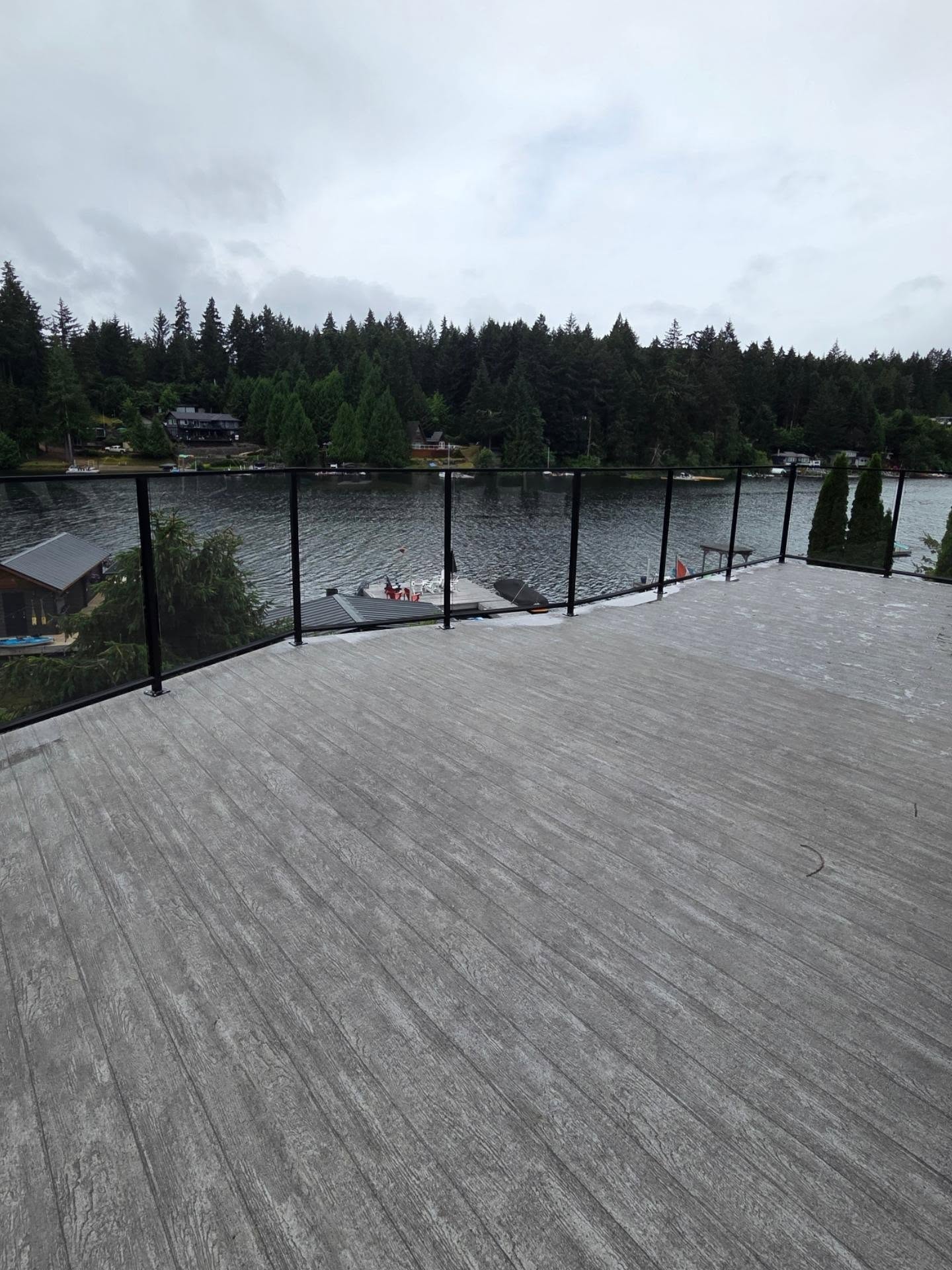
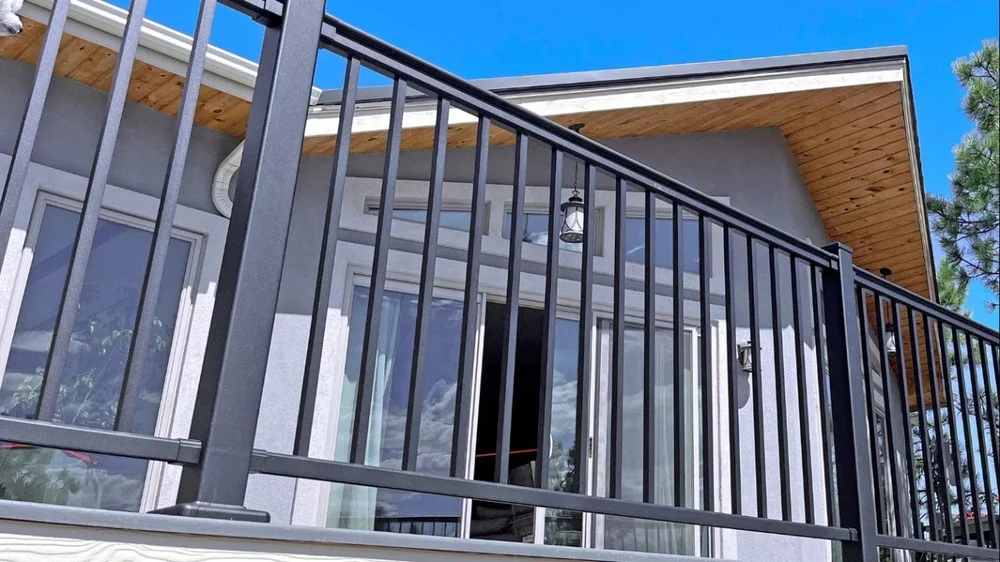
If you want to maximize the view from your deck, traditional wood or thick vinyl pickets just don’t make sense anymore. They break up a great landscape into frustrating vertical strips, require a ton of scraping and painting, and ultimately date the look of your home.
When it’s time for an upgrade, the debate usually narrows down to two premium modern options: Cable Railing Systems and Glass Panel Systems.
Both choices give you a sleek, minimalist aesthetic that opens up your horizon and boosts your property value. However, beneath the surface, they handle the elements, your weekend schedule, and your wallet in completely different ways. Choosing between cable and glass isn’t just an aesthetic choice; it’s a practical decision based on your local microclimate, how much maintenance you actually want to deal with, and your upfront budget.
Let’s break down the real-world trade-offs of cable vs. glass across the three factors that matter most: View Preservation, Long-Term Maintenance, and Total Cost.
The Quick Takeaway: Cable vs. Glass at a Glance
If you are trying to make a quick decision for an upcoming project, here is the baseline breakdown:
Choose Glass Panels if: You live on an exposed coastal bluff, windy hillside, or open lot and desperately want a physical windbreak so you can actually sit on your deck on gusty days. You don’t mind washing the panels a few times a year to keep them clear.
Choose Cable Railing if: You want 100% uninterrupted airflow, hate the idea of wiping down glass, have pets or kids who leave smudges, and want a modern, low-profile look that naturally blends into a treeline or natural backdrop.
1. The View Battle: True Transparency vs. The Invisible Line
It seems obvious that glass would win the view category on pure transparency, but when you install these systems in the real world, the definition of an “unobstructed view” changes depending on the sun and your vantage point.
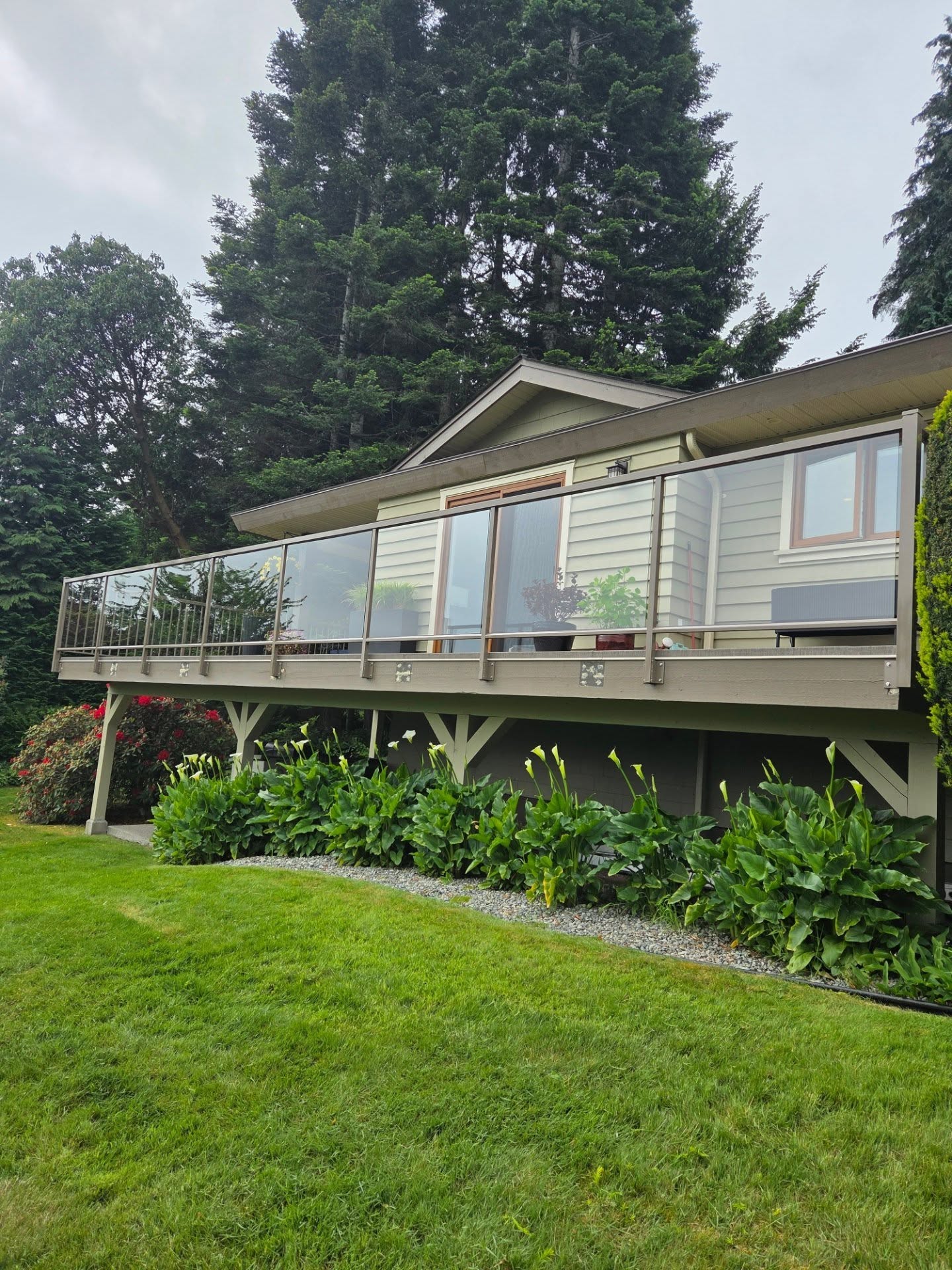
Glass Panels: The Unbroken Sheet
Glass gives you a completely solid panoramic view. When it is perfectly clean, it feels like there is nothing between you and the outdoors.
The Advantage: If your deck overlooks water, mountains, or a landscape where you want to see every single inch without a grid pattern, glass is the gold standard. When you are sitting down in a low deck chair, you look completely through the glass rather than through a series of lines.
The Trade-off: Reflection and glare. On bright, sunny days, polished glass panels can act like mirrors depending on the angle of the sun. You might find yourself staring at a reflection of your patio furniture or the back of your house instead of the scenery. Furthermore, glass is only perfectly transparent when it’s completely free of dust and smudges.
Cable Railing: The Optical Illusion
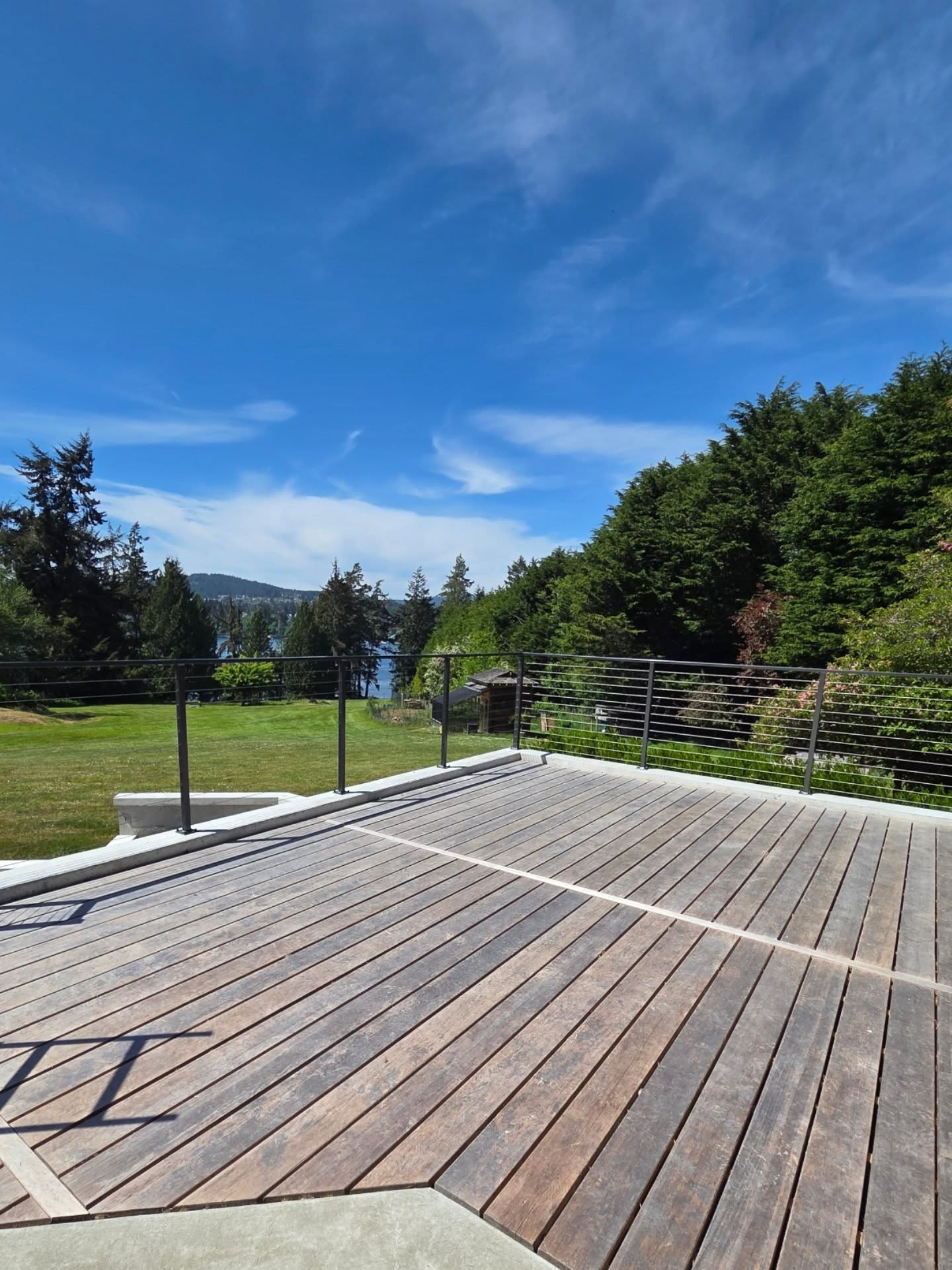
Cable railing uses thin, marine-grade stainless steel cables spaced exactly three inches apart, tensioned horizontally between rigid aluminum posts.
The Advantage: Cable works via a natural optical illusion. Because the stainless steel strands are so thin (typically 1/8″ or 3/16″ in diameter), your eyes naturally focus past them on the distant landscape, causing the horizontal lines to drop into the background. They don’t reflect sunlight or create a mirror effect the way a solid sheet of glass does.
The Trade-off: While cable blends into a distant horizon effortlessly, it is still visible when you are looking at things up close—like looking directly down into a nearby garden bed or pool area. If you are sitting low, those horizontal lines will cut across your field of vision, even if the profile is incredibly slim.
The View Verdict: For a completely solid panorama, Glass wins on pure transparency. For an anti-glare option that blends cleanly into natural, forested, or rustic backdrops without reflecting the sun, Cable takes the prize.
2. The Climate & Comfort Factor: Windbreaks vs. Airflow
This is the environmental trade-off that catches many homeowners by surprise. Your local microclimate—specifically how much wind and direct heat your deck gets—should play a major role in which system you install.
Glass Panels as a Structural Windbreak
If you live on an exposed coastal lot, a high ridge, or an open hillside, you know that a beautiful view often comes with relentless wind.
The Wind Shield: Solid tempered glass panels act as an incredibly effective windbreak. They stop chilling gusts right at the deck perimeter, creating a warm, protected pocket of air on your patio. This can effectively extend your deck season by several weeks in the spring and fall, letting you sit outside comfortably on days when an open deck would feel too cold.
The Greenhouse Effect: While a windbreak is excellent in chilly weather, it can become a liability during a summer heat wave. If your deck faces south or west and gets direct afternoon sun, solid glass panels trap the heat. Without a cross-breeze, your deck can quickly transform into a hot greenhouse, making the space uncomfortable during the warmest months of the year.
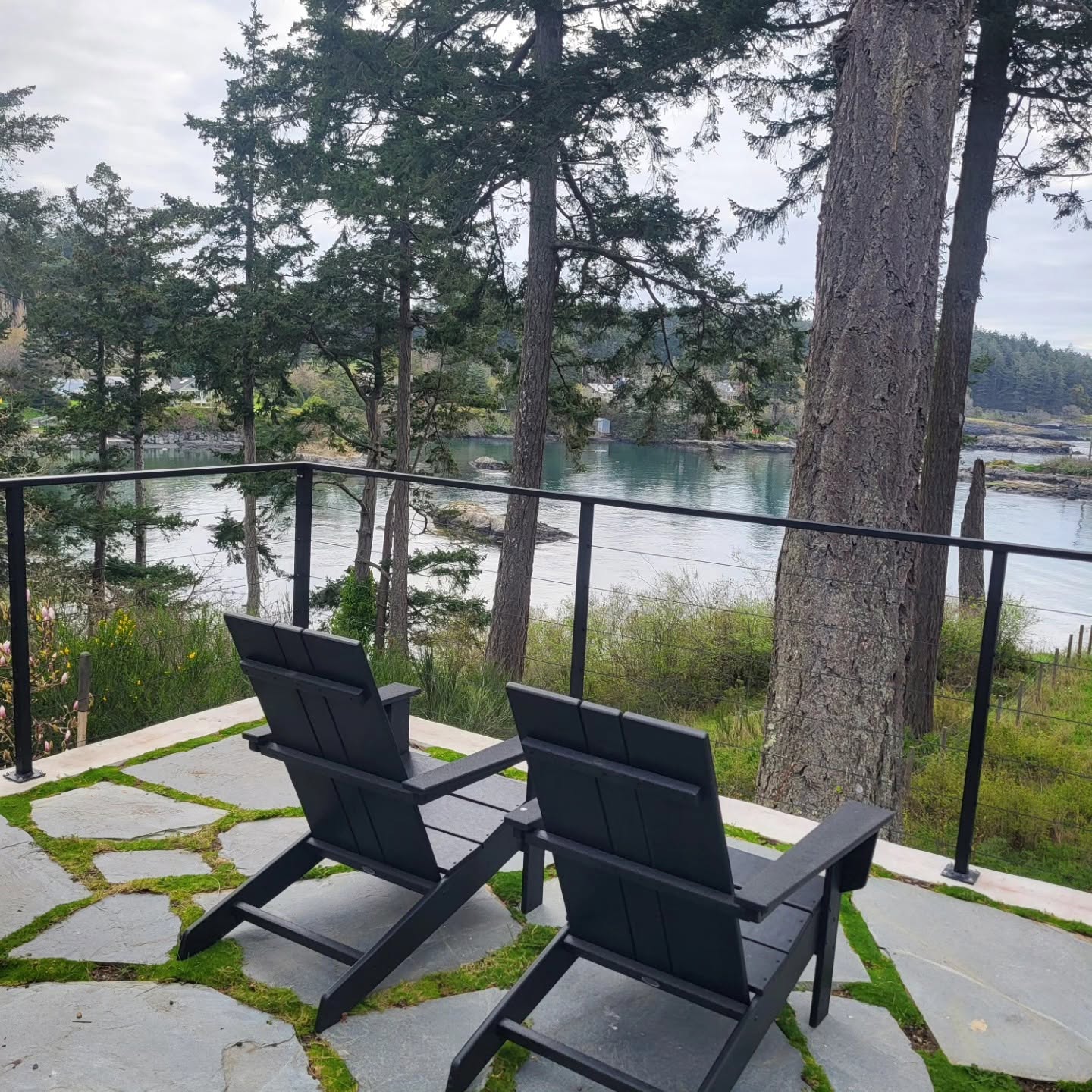
Cable Railings for Maximum Ventilation
Cable railing offers virtually zero resistance to moving air.
100% Airflow: On a hot summer afternoon, you want every single bit of passing breeze to cool you down. Cable railing allows air to flow freely across your deck floor, preventing heat from pooling and keeping your outdoor living space significantly cooler.
No Protection From the Elements: The flip side is simple. If your property is battered by cold, sweeping winds, cable railing will do nothing to stop it. Your patio area will feel the full force of the weather, and you may find yourself heading indoors much earlier in the evening once the temperature drops.
3. The Maintenance Reality: Squeegees vs. Tension Spanners
No outdoor product is truly “zero maintenance,” but the type of upkeep required for glass versus cable is completely different. One requires regular cosmetic cleaning; the other requires occasional mechanical adjustments.
Glass Maintenance: The Cosmetic Loop
Keeping outdoor glass looking pristine requires a commitment to a regular cleaning schedule. Glass is a natural magnet for environmental debris.
Salt Spray & Water Spots: If you live anywhere near the ocean, salt spray will coat your glass panels in a fine, hazy film within days. Even if you live further inland, rainstorms, morning dew, lawn sprinklers, and blowing dust will leave hard water spots and dirt trails across the panes.
Pets and Kids: If you have dogs or young children, glass panels quickly become a canvas for nose prints, muddy paws, and sticky fingerprints.
The Cleaning Regimen: To keep glass looking its best, you need to wash it. This usually means spraying it down with water, applying soap, and using a high-quality squeegee. While you can apply hydrophobic glass coatings (like Rain-X or commercial ceramic coatings) to help water bead off, you are still looking at a regular cosmetic chore.
Cable Maintenance: The Mechanical Baseline
Cable railing completely frees you from the cosmetic cleaning loop. Rain washes right past it, dirt has nowhere to stick, and dog noses go right through the gaps without leaving a trace. You will essentially never have to wash your cables. However, cable requires a different kind of structural upkeep.
Cable Stretch and Sag: Stainless steel cables are under intense tension—often hundreds of pounds of pressure per line. Over time, due to natural material settling, building shifts, and seasonal temperature changes, cables can stretch slightly and begin to sag.
The Tension Loop: If a cable sags, it creates a gap larger than four inches, which violates building safety codes. To fix this, you have to perform periodic tensioning. Using a simple spanner wrench or a hex key, you will need to go around to the terminal posts and tighten the tensioning nuts a few turns to pull the lines taut again. This is typically a 30-minute task performed once every year or two.
Post Rigidity Matters: Because cables are under constant tension, your posts must be incredibly rigid. If you use cheap, low-grade posts or unbraced wood, the immense pulling force of the cables will cause the posts to bow inward over time. Investing in heavy-duty, engineered aluminum posts is critical to prevent structural fatigue.
4. The Financial Breakdown: Upfront Cost vs. Installation Labor
Both glass and cable are considered premium architectural upgrades, meaning they cost significantly more than standard wood or basic vinyl picket systems. However, the way their costs are distributed across materials, engineering, and labor varies dramatically.
The Financial Realities of Glass Systems
The cost of a glass railing system depends heavily on whether you choose a framed system or a frameless system.
Framed Glass Systems: These feature aluminum top rails, bottom rails, and posts, with sheets of 1/4″ or 3/8″ tempered glass slotted into rubber gaskets between the posts. Material costs are moderate to high, but installation is relatively straightforward. The panels come pre-cut to standard sizes, and a contractor can drop them into place quickly, keeping labor costs manageable.
Frameless Glass Systems: This is the ultra-luxury look where thick, heavy sheets of 1/2″ tempered glass are held in place solely by heavy-duty steel clamps (called spigots or talons) bolted into the deck floor. There are no posts breaking up the view. Material costs are exceptionally high, and labor costs go up because handling massive, heavy sheets of thick glass requires precision, specialized handling safety equipment, and often a multi-person crew.
The Financial Realities of Cable Systems
Cable railing often surprises homeowners because the materials can actually be more expensive than framed glass, while the labor behaves differently.
The Hardware Factor: High-grade, Marine 316 Stainless Steel cable isn’t incredibly cheap, but the real cost lies in the fittings. Every single run of cable requires a specialized terminal tuner on one end and a fixed anchor fitting on the other. If you have an ordinary deck with 10 rows of cable running through multiple corners, you need dozens of precision-machined stainless steel fittings. This causes material prices to stack up quickly.
The Labor Factor: Installing cable is meticulous work. An installer must mount the posts, drill perfectly aligned intermediate holes through every single mid-post, manually thread hundreds of feet of cable through those holes, cut them to length, attach the fittings, crimp (swage) the connections, and then meticulously tension every single line by hand with a wrench to ensure it meets building code. This high labor-hour requirement can drive up installation costs unless you use pre-assembled, modular aluminum cable panel systems.
5. Safety, Kids, and Pets: Clear Barriers vs. The Ladder Effect
If you have children or pets, safety isn’t just a section in a building code book—it’s a daily peace-of-mind requirement. Both systems are incredibly safe when installed correctly, but they present unique behavioral dynamics for families.
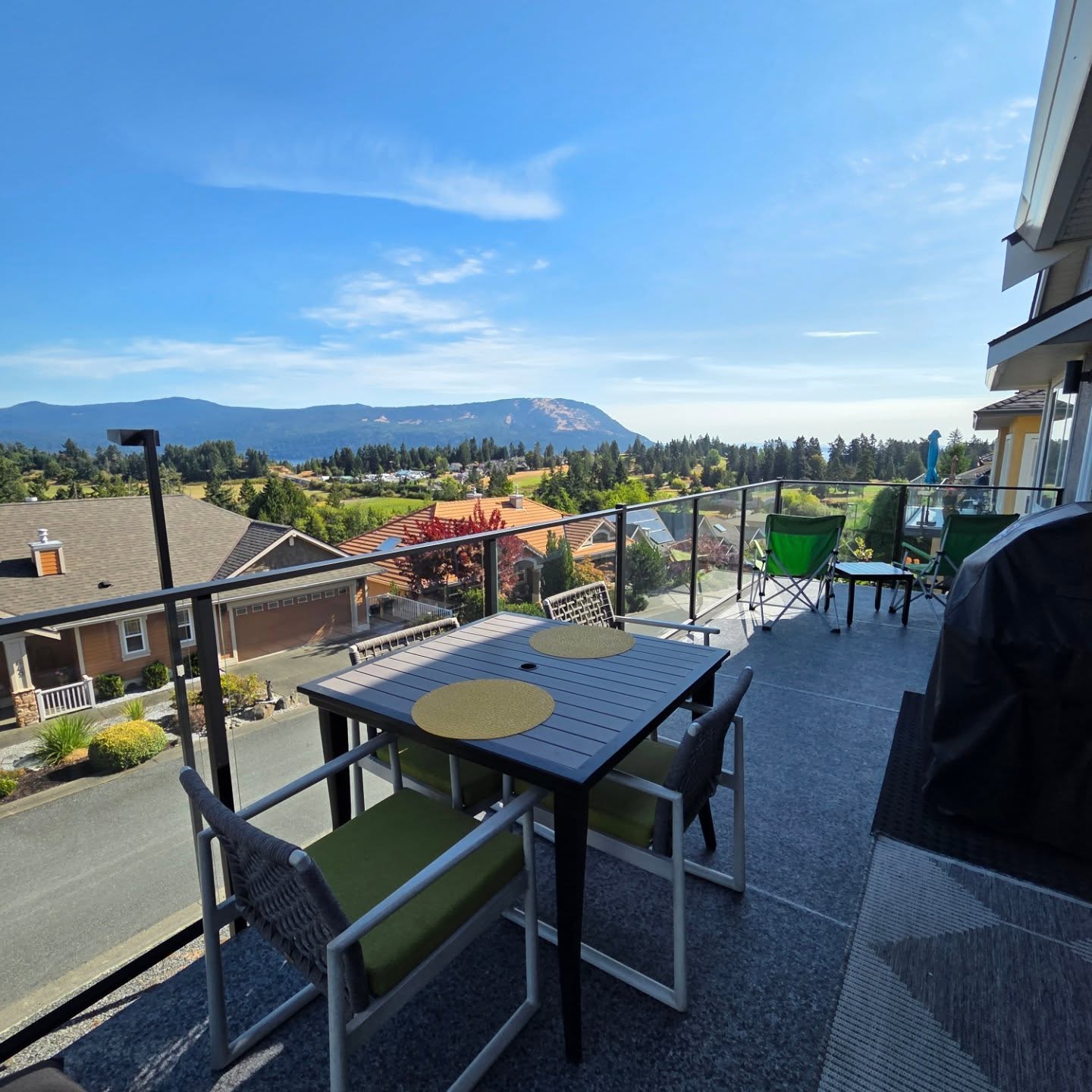
Family Dynamics with Glass
The Solid Wall: Glass creates a literal, impenetrable wall. Toys, soccer balls, and dog treats cannot slip through the railing and fall to the ground below.
Pet Comfort: Small dogs often love glass railings because they can sit on the deck and watch the neighborhood without having to peer through bars or strain their necks.
Wildlife Hazards: The primary safety concern with glass is actually for local wildlife. Birds can fail to see highly transparent or highly reflective glass panels, leading to strikes. If your property sits along a major bird flight path or is surrounded by dense trees, you may need to apply subtle, UV-reflective decals to the glass to help birds spot the barrier.
Family Dynamics with Cable and the "Ladder Effect"
The Spacing Rule: Building code requires that a 4-inch sphere cannot pass between any two cables at any point under pressure. This ensures that a toddler or a small pet cannot squeeze through the lines and get stuck or fall.
The Ladder Effect Controversy: For many years, building inspectors and local safety boards were wary of horizontal cable railings because they feared they created a natural “ladder” that adventurous children could easily climb to scale the guardrail.
Modern Building Codes: In recent revisions of the National and BC Building Codes, restrictions on horizontal railings have eased significantly for residential properties, provided the spacing is structurally rigid and cannot easily be deflected. However, if you have toddlers who love to climb everything in sight, the horizontal lines of a cable system will require more active parental supervision than a smooth, unclimbable vertical wall of glass.
Comparing the Systems: Side-by-Side Trade-offs
To help you pull all of these variables together, here is how these two premium systems stack up side-by-side across every critical category:
| Feature | Glass Panel Systems | Cable Railing Systems |
|---|---|---|
| Primary View Style | Complete panorama (unbroken sheets) | Minimalist profile (lines fade into background) |
| Wind Performance | Excellent structural windbreak | Zero wind protection (allows 100% airflow) |
| Sun & Heat Handling | Traps heat (can create greenhouse effect) | Keeps deck cool (maximum cross-ventilation) |
| Cleaning Requirement | High (squeegee required for dust/salt spray) | Extremely low (practically self-cleaning) |
| Mechanical Upkeep | None | Low (occasional cable tensioning checks) |
| Pet & Kid Friendliness | Keeps small objects on deck; leaves smudges | Eliminates smudges; requires climb-supervision |
| Glare & Reflection | High potential for sun glare and mirror effects | Zero glare; brushed satin finish absorbs light |
So, Which System Survives Your Deck?
When you boil it all down, choosing between cable railing and glass panels comes down to identifying your deck’s biggest natural challenge.
If your deck’s biggest enemy is the weather—if sweeping, cold winds prevent you from enjoying your outdoor space for half the year—then Glass Panels are an investment that pays off in pure physical comfort. They shield you from the elements, lock in warmth, and give you that clean, resort-style luxury look.
If your deck’s biggest enemy is maintenance and chores—if the thought of cleaning pollen, hard water spots, dog nose smudges, or coastal salt crust off of multiple sheets of glass sounds like a frustrating weekend project—then Cable Railing is the practical choice. It gives you a sleek, high-end, contemporary West Coast look that honors your landscape, stays cool in the summer heat waves, and lets you spend your weekends relaxing rather than wielding a squeegee.