There is nothing quite like sitting out on your deck as evening falls. Whether you’re unwinding after a long week, hosting a weekend barbecue, or taking in a quiet moment under the stars, your outdoor living space is meant to be enjoyed well past sunset.
However, as the sun goes down, dark decks can quickly turn into safety hazards. Stairs become tricky to navigate, steps disappear into shadow, and the sleek beauty of your aluminum railing gets lost in the dark.
Adding built-in deck railing lighting is one of the single best upgrades you can make to your home. It creates an inviting atmosphere, enhances safety, and turns a basic deck into a stunning nighttime focal point. When deciding how to illuminate your aluminum railings, the choice usually comes down to two main options: Solar-Powered Railing Lights or Low-Voltage LED Lighting Systems.
In this guide, we’ll break down how solar and low-voltage LED systems work on aluminum deck railings, compare their performance, cost, and reliability, and help you choose the perfect setup for your outdoor space.
Why Lighting Built into Aluminum Railings Makes Sense
Before diving into power sources, it helps to understand why integrated railing lighting has become so popular compared to traditional floodlights or overhead patio fixtures.
Targeted Safety Lighting: Standard floodlights create harsh shadows and glare. Railing lights cast low, ambient light directly onto walkways, deck boards, and stair treads where visibility matters most.
Preserving Views: Overhead patio lights reflect off glass panels and wire mesh, creating an distracting glare. Under-rail strips and post cap lights keep the light low and downward-facing, preserving your views of the yard, ocean, or stars.
Sleek Architectural Integration: Powder-coated aluminum railings are built with clean lines and hollow channels. Modern lighting components are designed to fit seamlessly into top rails, post caps, and stair brackets for a built-in look with no ugly exposed wiring.
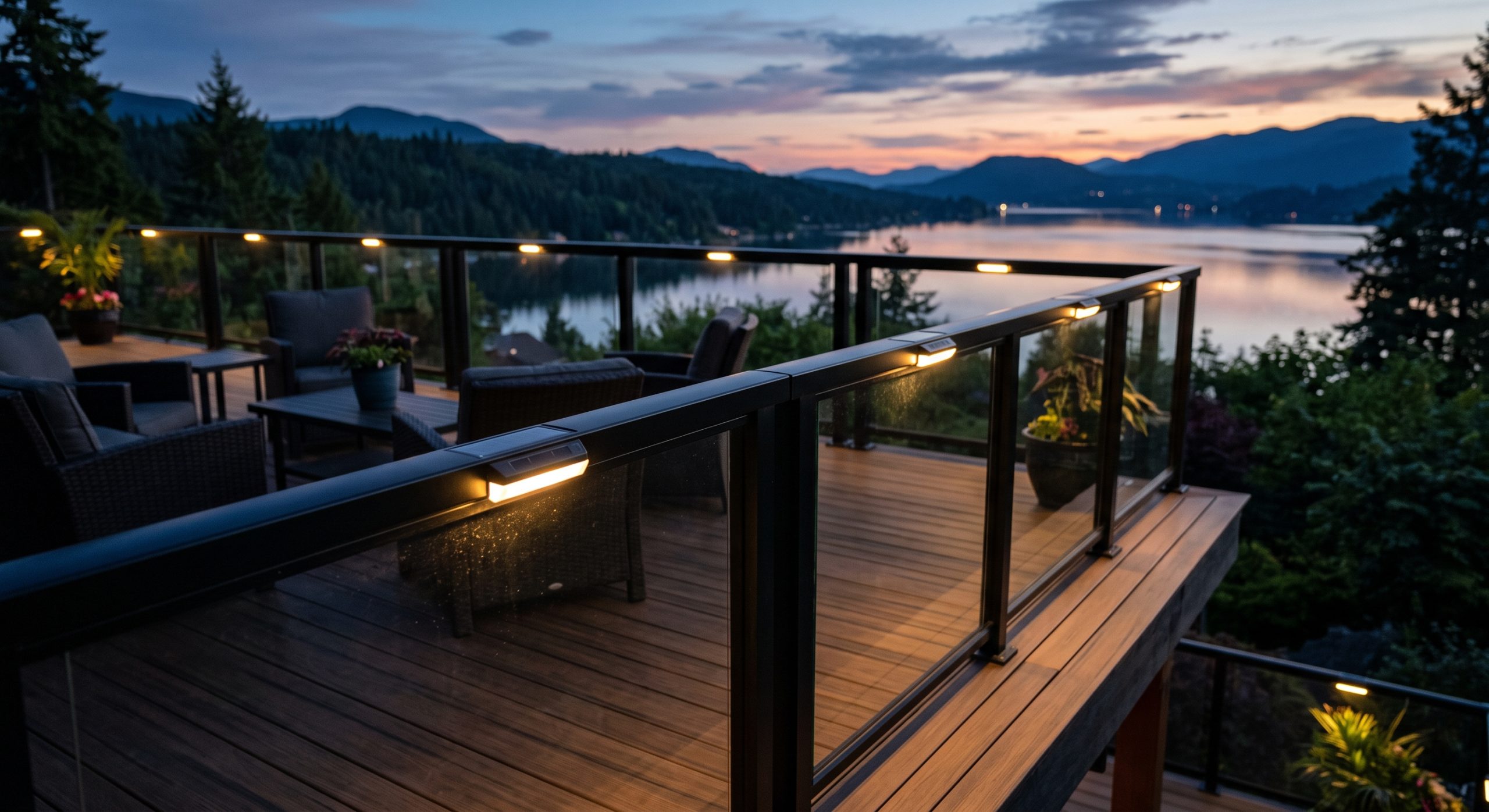
Option 1: Solar-Powered Aluminum Railing Lights
Solar deck lights are self-contained fixtures that store solar energy in small rechargeable batteries during the day and automatically turn on when dusk falls.
They are widely available at home improvement stores and online retailers, making them a common choice for DIY homeowners looking for a quick lighting solution.
The Pros of Solar Railing Lights
Simple DIY Installation: Because solar lights operate completely independently, there are no wires to run, no transformers to plug in, and no electrical connections to make. You simply mount the fixture to your aluminum posts or top rail, and it’s ready to go.
Zero Operating Costs: Solar fixtures draw 100% of their power from the sun. Once you purchase the light, running it costs nothing on your monthly electric bill.
No Electrical Work Required: For existing decks where running clean wiring inside posts would require significant dismantling, solar fixtures offer a simple add-on option without opening up rail channels.
The Cons of Solar Railing Lights
Inconsistent Brightness & Lifespan: Solar lights depend heavily on direct sunlight. On overcast days, during dark winters, or on decks shaded by large trees or roof overhangs, solar batteries struggle to charge fully. This leads to dim, flickering light that shuts off after just a few hours.
Bulkier Profiles: Because each light fixture must house its own solar panel and rechargeable battery pack, solar cap lights tend to be chunkier and less streamlined than wired LED fixtures.
Frequent Battery Replacements: The small rechargeable batteries inside solar fixtures degrade quickly under outdoor temperature swings. Rain, moisture, and winter freezing often degrade solar units within 1 to 3 years.
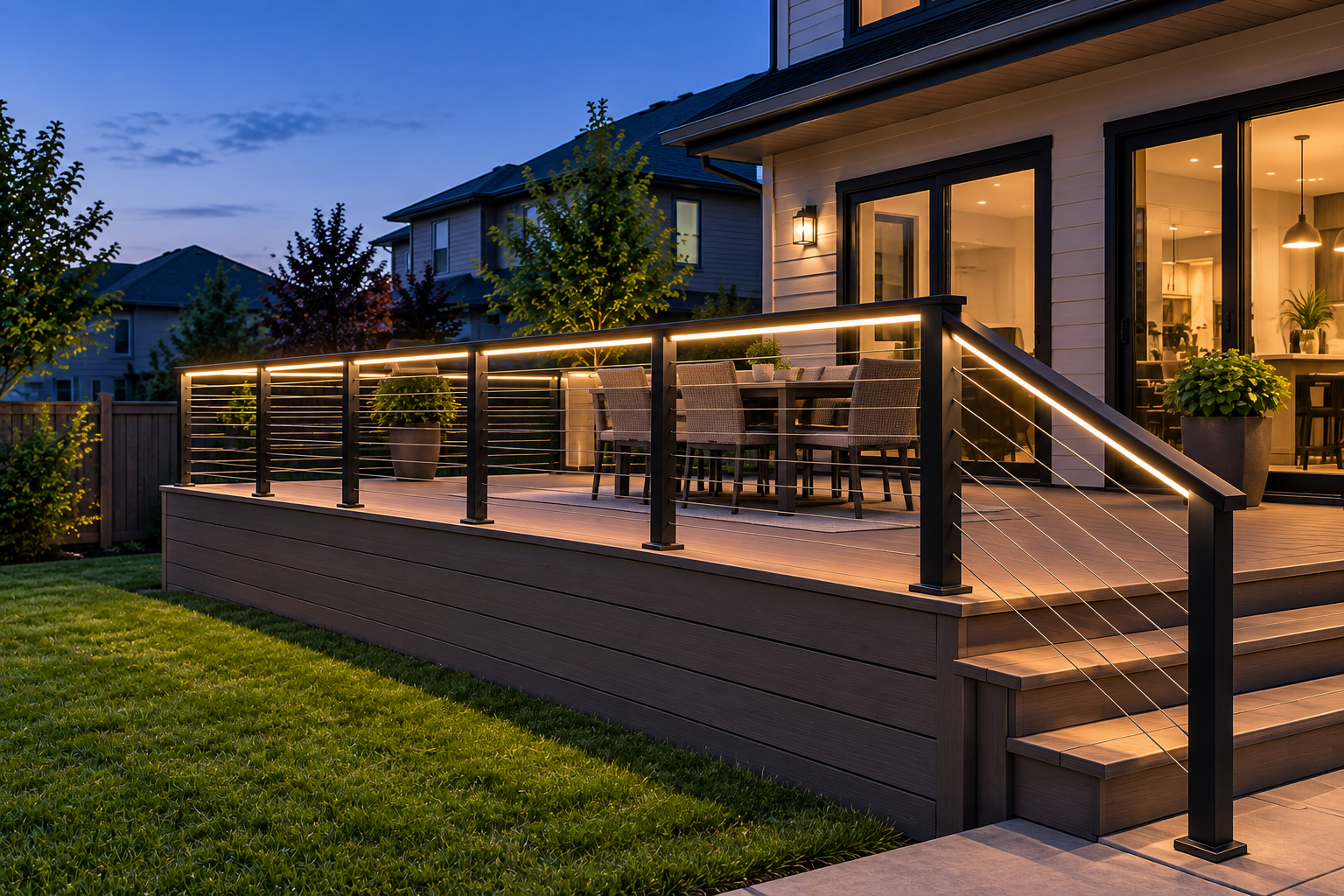
Option 2: Low-Voltage LED Railing Lighting Systems
Low-voltage LED systems operate on a safe 12-volt (12V) electrical circuit connected to a standard outdoor outlet via a low-voltage transformer.
These systems use ultra-efficient LED bulbs designed specifically for architectural metal railings, concealing wiring neatly inside aluminum post channels and under top rails.
The Pros of Low-Voltage LED Railing Lights
Unmatched Reliability & Consistent Brightness: Weather and cloud cover have zero impact on low-voltage LEDs. Whether it’s mid-July or a rainy November evening, your deck lighting turns on at full brightness every single night.
Ultra-Sleek, Hidden Profiles: Because the power source is centralized at a transformer, the individual light fixtures are compact. Linear under-rail LED strips, slim post cap accents, and flush-mount riser lights blend naturally into aluminum railing profiles without bulky add-ons.
Long-Term Durability & Energy Efficiency: Commercial-grade 12V LED fixtures are built to withstand harsh outdoor weather, rain, and temperature shifts. Quality LEDs routinely last 50,000+ hours (over a decade of nightly use) while pulling minimal wattage.
Smart Controls & Dimmability: Low-voltage transformers easily connect to automatic photocells, timers, dimmer switches, and smart home systems. You can schedule your lights to turn on at sunset, dim at midnight, or control them from your smartphone.
The Cons of Low-Voltage LED Railing Lights
Higher Initial Cost: Between the transformer, specialized wiring, and architectural-grade LED fixtures, low-voltage systems require a higher initial material investment than a pack of solar cap lights.
More Involved Installation: Wires need to be cleanly routed through aluminum post channels, under deck boards, and back to the main transformer. While 12V wiring is completely safe for DIYers, it takes extra planning and effort during deck construction or railing installation.
Head-to-Head Comparison: Solar vs. Low-Voltage LED
To make your decision easier, here is a quick breakdown comparing how solar and low-voltage LED systems perform across key categories:
| Feature | Solar Railing Lights | Low-Voltage (12V) LED |
|---|---|---|
| Installation Complexity | Very Easy (No wiring) | Moderate (Runs low-voltage wiring) |
| Nightly Reliability | Variable (Depends on weather/shade) | 100% Reliable year-round |
| Light Quality & Dimming | Fixed, low brightness | Bright, warm, fully dimmable |
| Fixture Lifespan | 1 – 3 years average | 10+ years (50,000+ hours) |
| Integration with Railings | Add-on caps & clip-ons | Seamless, built-in channels |
| Upfront Material Cost | Low ($) | Moderate ($$) |
Popular Aluminum Railing Lighting Placement Styles
Once you’ve settled on a power source (with low-voltage LED being the gold standard for custom aluminum railings), you can select the style and placement of your light fixtures:
1. Post Cap Lights
Post caps sit right on top of aluminum posts. They can cast a warm, downward halo of light along the sides of the post or provide a soft perimeter glow around the deck. They serve as great visual markers defining the edges of your outdoor space.
2. Under-Rail Channel Lighting (Linear LED Strips)
Under-rail lights are concealed directly inside the bottom channel of your aluminum top rail. They shine a continuous, indirect band of light straight down over the pickets, cable strands, or glass panels. Because the light source is hidden from view, under-rail lighting provides rich ambient glow without any direct glare.
3. Surface-Mounted Accent / Sconce Lights
Mounted on the side of aluminum posts or under stair railings, side sconces direct light downward onto deck boards and stair steps. These fixtures are ideal for highlighting specific pathways or adding subtle visual depth to long railing sections.
4. Stair Riser & Tread Lights
Safety on outdoor stairs is critical. Flush-mounted stair lights installed into the vertical risers or under the stair overhang ensure every step is clearly lit. Connecting stair lights to the same transformer circuit as your railing lights creates a unified look across the entire deck.
Planning Your Lighting Installation Cycle
Choose Solar Railing Lights if: You’re adding a few accent lights to an existing deck, want an easy afternoon DIY project, don’t have access to an outdoor GFCI power outlet, and don’t mind replacing fixtures every couple of years.
Choose Low-Voltage LED Lighting if: You’re installing new custom aluminum railings, want reliable year-round safety lighting, live in an area with dark winters or frequent overcast weather, and want a sleek, built-in look that lasts for years.
By routing low-voltage wire inside the hollow structural posts and top rails before mounting the final caps, the entire wiring harness remains completely protected from weather, UV rays, and physical damage.
Which System Should You Choose?
Choose Solar Railing Lights if: You’re adding a few accent lights to an existing deck, want an easy afternoon DIY project, don’t have access to an outdoor GFCI power outlet, and don’t mind replacing fixtures every couple of years.
Choose Low-Voltage LED Lighting if: You’re installing new custom aluminum railings, want reliable year-round safety lighting, live in an area with dark winters or frequent overcast weather, and want a sleek, built-in look that lasts for years.
Elevate Your Deck’s Nighttime Potential
Custom aluminum deck railings provide durability and modern style during the day—and adding integrated low-voltage LED lighting lets you enjoy those benefits long into the night.
By selecting quality fixtures that match your railing finish and concealing the wiring within aluminum post channels, you get a beautiful, safe outdoor space that’s ready for every evening gathering.